Author: Lake County Partners

Fox Lake Celebrates the Grand Opening of The Residences at the Quarry

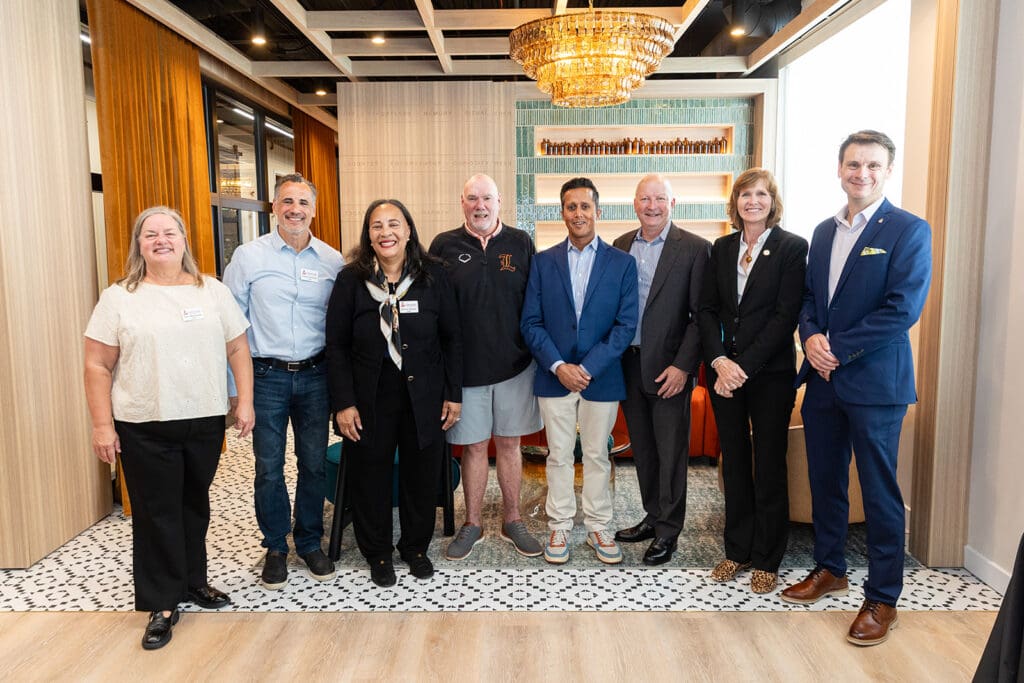
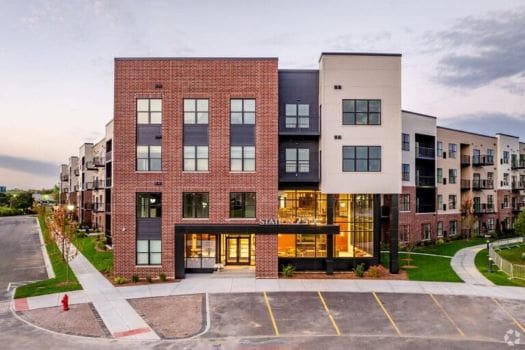
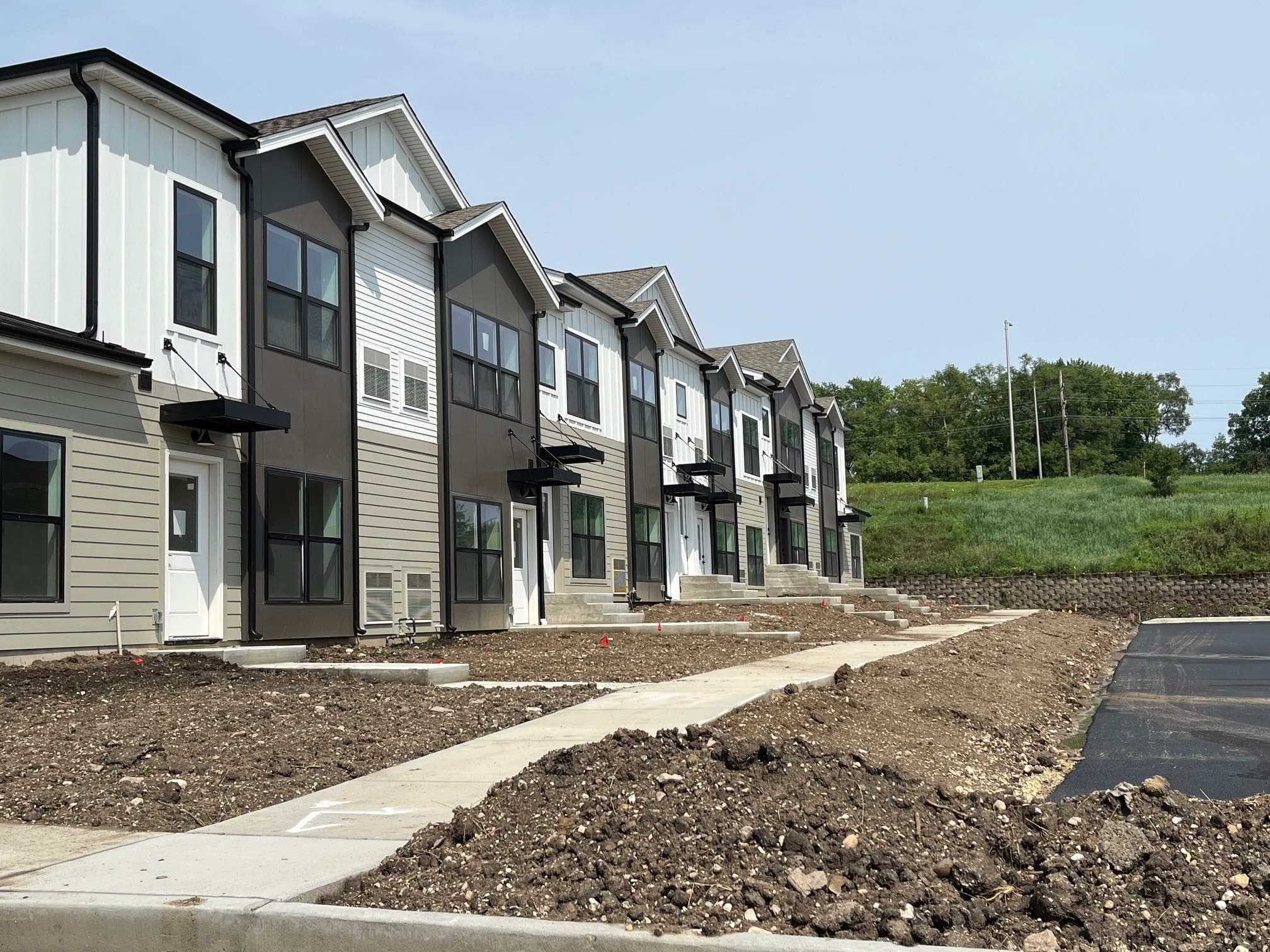
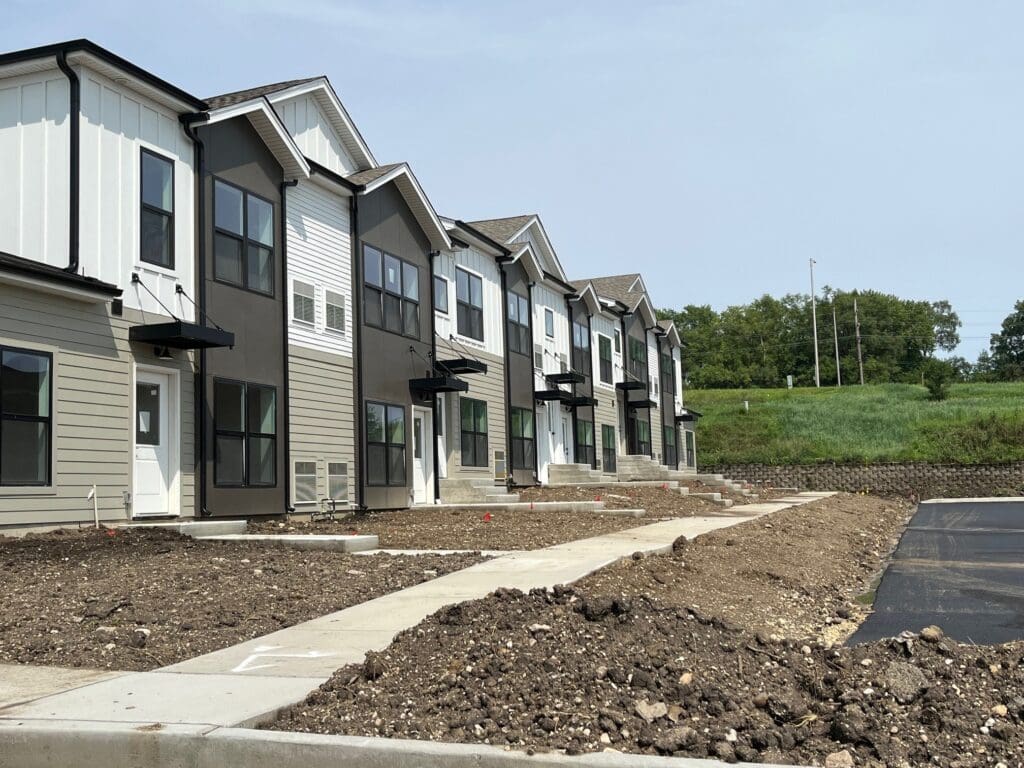
The Village of Fox Lake, in partnership with Charles Hall Construction, Sterling Hall Capital, and WCP Fox Lake I, is proud to announce the official grand opening of The Residences at the Quarry (“The Quarry”), a new 154-unit market-rate apartment complex located at Route 12 and Big Hollow Road. This modern development is bringing new housing options to the Fox Lake community, addressing the growing demand for high-quality residential living in Lake County, Illinois.

Following a market analysis for the subject site, it was determined that the highest and best use of this property, given its proximity to the existing retail uses, including Jewel-Osco to the south, as well as its limited access, and reduced visibility from Route 12 – would be residential development. Additionally, The Quarry represents years of valiant efforts to help bring new “missing middle” housing to Fox Lake. This type of housing is designed for individuals and families seeking quality housing that balances affordability and modern amenities.

“The Quarry provides a place to call for home new residents and families, and that is important to me as this will help enhance the economic vitality of Fox Lake”, says Donny Schmit, Mayor of Fox Lake. “This project would not have happened without the developers and community collaborators such as Big Hollow School District #38, Grant Community School District #124, Fox Lake Public Library District, Grant Township and Lake County Partners.”

For example, Lake County Partners worked with the Village and the developers to obtain an Enterprise Zone Designation which helped offset certain costs associated with the construction materials, thereby making the financial viability of this project possible.

With regards to the composition of The Quarry, this community provides living options from one-to three-bedroom units in a town-home style design with over 57% of the units having garages attached. Amenities include a clubhouse, fitness center, dog park, and outdoor recreation space. The first units have welcomed the newest residents of this development and to Fox Lake. Some of the buildings will finish up and welcome additional residents in 2027. Upon full completion, the new residential community will advance the goals and objectives that were identified in the recently completed 2025 Comprehensive Plan. Specifically, this new development advances a key goal found in the 2025 Comprehensive Plan, provide a variety of new housing, as this is the first new multi-family project that went verti-cal within Fox Lale in the past 15 years.

How Does this Development Fit into Lake County’s Housing Goals?

The Quarry in Fox Lake is a strong example of how Lake County’s housing strategy is translating into tangible development. The new apartment project adds much-needed housing options in a part of the county where there is demand for high-quality, attainable housing. With a mix of one- and two-bedroom townhome-style apartments, The Quarry helps address the county’s “missing middle” housing needs while supporting Fox Lake’s broader goals for residential and economic growth.

Just as importantly, the project demonstrates the connection between housing and economic development: if Lake County wants to attract and retain businesses and talent, it needs places for people to live. The Quarry is one of the projects helping expand that housing supply and strengthen the communities that make Lake County an attractive place to live, work and invest. Click here to learn more about the Village of Fox Lake. Click here to learn about Lake County’s housing strategy, and click here for recent insights into local communities’ efforts to meet new housing development goals.

Housing is at the Forefront of Lake County’s Economic Development Strategy

For years, conversations about economic development have often centered on attracting and retaining businesses, creating jobs and investing in infrastructure. But increasingly, one question is becoming just as important: Where will the people who work here live?

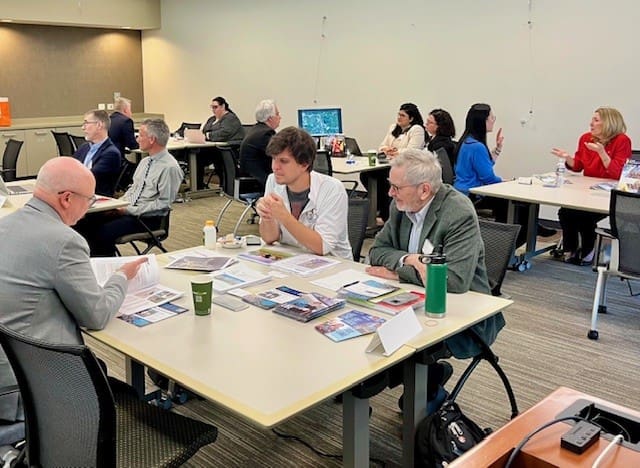
That question was at the center of a recent municipal workshop, hosted by Lake County Partners and sponsored by Libertyville Bank & Trust, which included a panel of speakers from Fox Lake, Lincolnshire, Round Lake, and Vernon Hills.

“Meetings like these create an important forum for municipal leaders to come together, share what they’re seeing in their communities and learn from one another,” said Steve Madden, CEO of Libertyville Bank & Trust Company, N.A. and Former Chair of Lake County Partners’ Board of Governors. “By bringing people to the same table to discuss challenges, share ideas and explore practical solutions, we can strengthen collaboration across Lake County and help communities move important economic development initiatives forward.”

The discussion made one thing clear: housing is no longer separate from economic development. It is a critical part of it.

As Lake County continues to see investment across life sciences, manufacturing, office, retail and other sectors, the availability and diversity of housing will play an increasingly important role in the county’s ability to attract businesses, retain talent and support long-term growth.

Nearly 800 New Housing Units & Counting

Lake County Partners has made significant progress on the housing front this year, helping drive nearly 800 new housing units across the county. Developments have included:

  • Continuum Capital, Libertyville
  • Centennial Hawthorn #1 (open several years ago) and #2 (currently in for permit), Vernon Hills
  • Zeller – Modena, Highwood
  • Shorewood, Buffalo Grove

That work comes alongside projects and investments in major economic sectors, including life sciences, manufacturing and office development. The connection is intentional. When companies considering Lake County ask about the region’s workforce, quality of life and ability to attract talent, housing is part of the conversation.

A strong housing market gives employers more options when recruiting and retaining employees. It can help reduce long commutes, support vibrant commercial districts and create the population density necessary to sustain restaurants, retailers and other community amenities.

In other words, housing helps make Lake County competitive.

The challenge is that new housing is increasingly difficult to build. Land, infrastructure, labor and construction costs have all increased, making the economics of development more complicated. That means municipalities and regional partners are looking for practical tools that can help projects move forward.

One such tool is the use of Enterprise Zones.

Lake County Partners works with municipalities to explore how enterprise zones can be layered onto eligible properties to support housing development. One potential benefit is an exemption at the point of sale that effectively reduces the cost of eligible building materials by 6.25%.

On a large project, that can make a meaningful difference. For example, on a $44 million project, with the assumption that 40% of the project budget is eligible building materials, an exemption of 6.25% of state sales tax alone would equal $1.1 million in savings.

In a development environment where costs can determine whether a project moves forward, that kind of savings can be the linchpin that makes a deal work.

Fox Lake: Creating Certainty for Developers

Fox Lake offered a strong example of how proactive planning and communication can help create an environment for housing development.

The village’s work has focused on advancing housing through local technical assistance and a broader strategy centered on transit-oriented development, downtown revitalization and mixed-use growth. “Fox Lake currently has more than 350 housing units under construction or in the development pipeline, including approximately 300 market-rate units expected to become available in late September and 50 affordable units currently going through Final PUD,” reports Patrick Ainsworth, the Economic Development Director at the Village of Fox Lake. “That progress did not happen in isolation.”

The village’s comprehensive plan and downtown plan have helped establish a clear vision for where and how development should occur. Those plans provide greater certainty to both the community and developers as projects move through the application and approval process.

Fox Lake has also created new, non-binding opportunities for developers to bring housing concepts forward for review and receive feedback before formally entering the entitlement process.

That approach allows issues to be identified earlier, while projects are still taking shape.

The Mayor and village leadership have also made a point of investing time upfront to provide guidance as applications are developed. That open dialogue has helped create a more collaborative process and, ultimately, helped fuel new projects. In this way, Fox Lake uses certainty as an economic development tool.

When municipalities clearly communicate their vision and engage with developers early, it can reduce uncertainty and help projects move more efficiently.

Vernon Hills: Finding New Life for Commercial Property

Vernon Hills is approaching housing from a different angle—by looking at how existing commercial areas can evolve.

The village has put strategic effort into the retail and commercial spaces for which Vernon Hills is known, particularly around the Milwaukee Avenue and Route 60 intersection.

A decade ago, there were no residential units within a half-mile of that intersection. Today, that is changing dramatically.

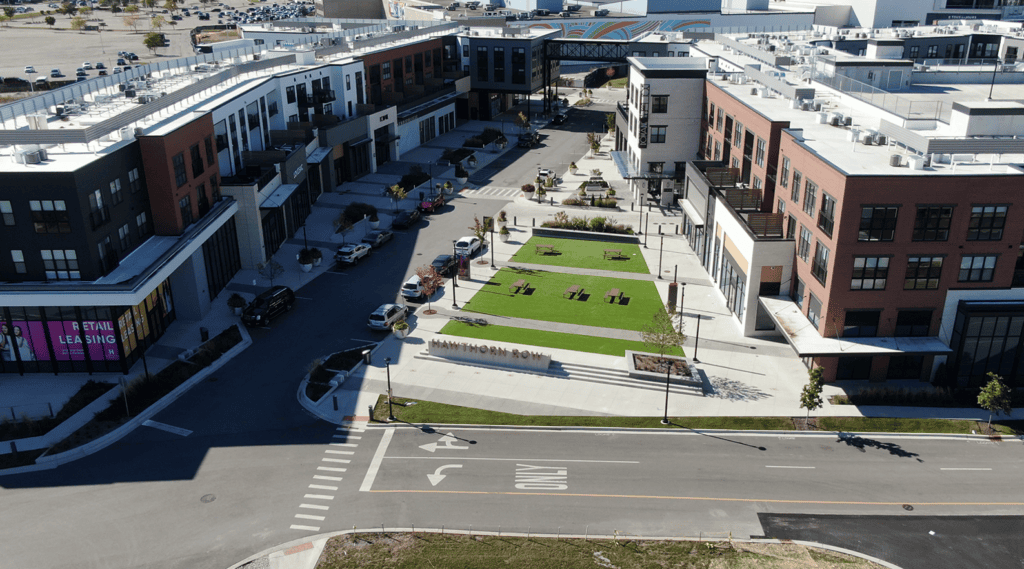
The redevelopment of Hawthorn Mall has served as a catalyst, with projects such as The Domaine, which includes 311 apartment units, helping establish a new residential component within a traditionally retail-focused area.

A second phase, to be known as Solaire, will mirror the existing units, contributing to a broader transformation that could eventually bring approximately 1,500 residential units to an area where there was virtually no housing a decade ago.

The impact goes beyond the number of rooftops.

“Adding housing near existing retail can change how people interact with commercial districts. Residents living within walking distance of stores, restaurants and services can create a built-in customer base and help support businesses throughout the day and evening,” observes Community Development Director Andrew Jennings.

Vernon Hills’ experience also points to an increasingly important opportunity across the region: redeveloping underutilized commercial property for housing.

Retail spaces on the fringe of established commercial areas may offer opportunities for redevelopment, particularly as consumer habits and the traditional retail landscape continue to evolve.

But these projects come with considerations, including infrastructure. Converting commercial property to residential use can require significant changes to utilities, roads, parking and other infrastructure.

At the same time, the addition of new rooftops can strengthen nearby commercial development and create opportunities for reinvestment.

The result is a potentially powerful cycle: new housing supports commercial activity, while revitalized commercial areas make new housing more attractive.

Round Lake: Policy Changes and Partnerships

In Round Lake, the focus has been on creating the policies, partnerships and housing choices needed to support future growth.

“The village has been working to advance housing development while updating its comprehensive plan to more clearly define what types of housing the community wants—and, importantly, who it wants to attract and retain,” notes Katie Parkhurst, the Director of Community Development.

The village recently updated its impact fees, which had not been comprehensively reviewed since the 1990s. With development activity increasing, Round Lake worked with local school and park districts to evaluate the fee structure.

The result was a reorganization of the fee structure which generally decreased the overall impact fee. The actual fee varies by bedroom count and housing type.

That is part of a broader effort to make the development process smoother and more responsive to current market conditions.

Round Lake is also taking a partnership-oriented approach. The village is working with organizations including CMAP, the Housing Lake Coalition, the Northern Illinois Land Bank, Habitat for Humanity and the local Realtors Association. Those partnerships are helping address everything from missing-middle housing to the redevelopment of blighted or underutilized properties.

The Northern Illinois Land Bank, in particular, has become a valuable resource for addressing properties that may otherwise remain vacant or underutilized. Habitat for Humanity is also actively contributing to the village’s housing stock, with a new home currently under construction following the successful completion of another.

The village’s approach demonstrates that housing progress does not always come from one large development. It can come through a collection of policies, partnerships and smaller projects that collectively expand housing choices.

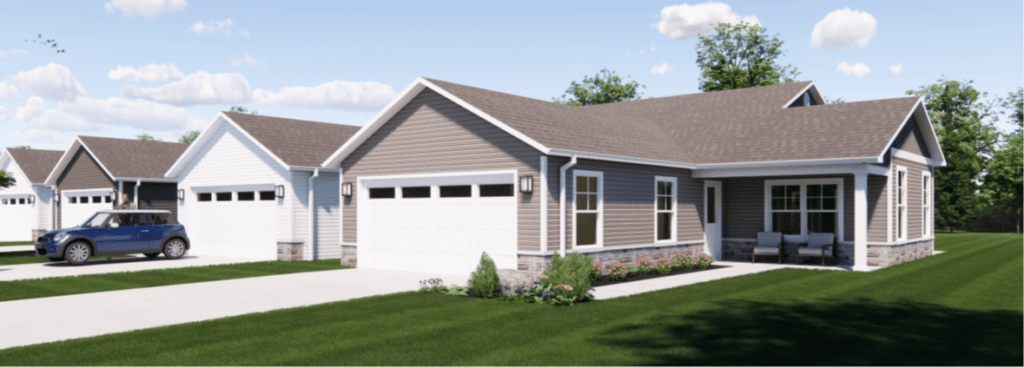
Among the new housing coming to Round Lake is a development known as Cambridge Courts, infill single-family homes, a 17-unit market-rate apartment building at Coventry Glen and 138 single-story market-rate rental units by Redwood Development.

Together, those projects add variety to the community’s housing stock while supporting a broader strategy for growth.

Lincolnshire: Turning an Office Challenge into a Housing Opportunity

Lincolnshire is confronting another issue facing communities throughout the region: what happens to underutilized office space?

The village has historically been a strong office location, but changing market conditions and declining demand have resulted in increased vacancies.

Rather than viewing that only as a challenge, Lincolnshire is examining whether some office properties could become part of the community’s future housing supply.

“The village’s 2024 Comprehensive Plan and participation in the 2025 Homes for a Changing Region Housing Study have helped shape that conversation, and market trends are certainly playing an important role,” notes Tonya Zozulya, Lincolnshire’s Planning and Development Manager.

Multifamily housing has emerged as one potential alternative for vacant or underutilized office properties, particularly as residents increasingly seek walkability, mixed-use environments, diverse housing options and community gathering spaces.

Employers are looking for many of the same things from a different perspective. Housing close to employment centers can help companies retain employees, reduce long-distance commutes and provide workers with more opportunities to live near their jobs.

Lincolnshire’s experience also underscores an important point about density.

Discussions about adding housing should not focus solely on the number of units. Density can also create opportunities for additional open space, improved amenities, walkability and other quality-of-life improvements.

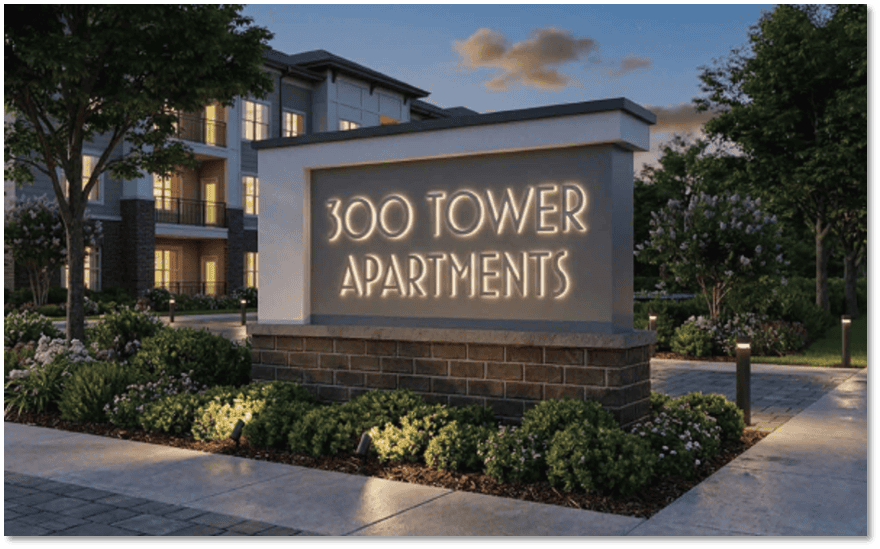
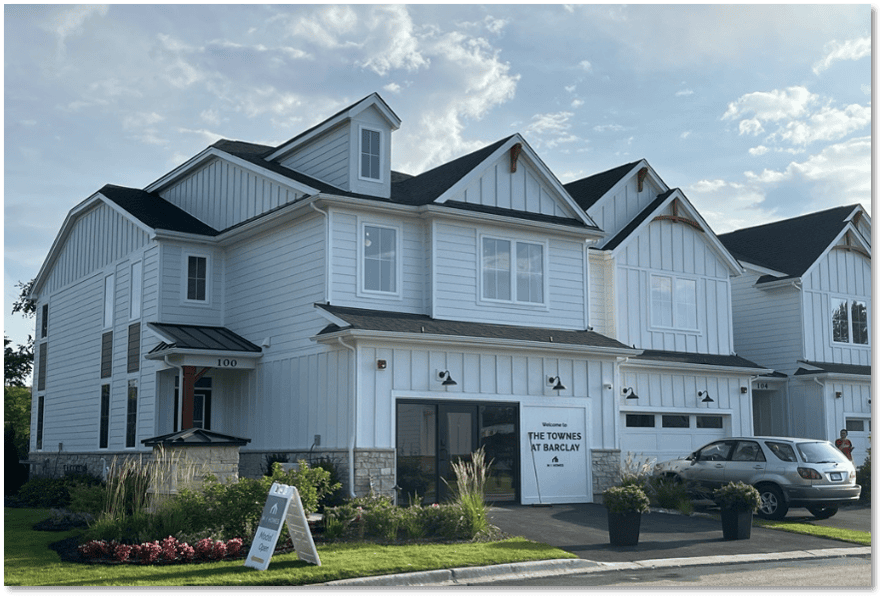
The goal is not simply to add housing—it is to create communities where people want to live. Projects such as 300 Tower Apartments and The Townes at Barclay Townhomes demonstrate how Lincolnshire is beginning to translate that vision into development.

Making Housing Part of the Economic Development Toolbox

Across all four communities, a common takeaway emerged: zoning and development policy can be economic development tools.

When land, infrastructure, operating and construction costs are high, municipalities have to consider what factors can meaningfully improve the economics of a project.

That does not necessarily mean lowering standards or abandoning community priorities. Instead, it can mean examining whether existing regulations, processes and incentives reflect current market conditions and community goals.

It also means building relationships before a project arrives.

Municipal leaders emphasized the importance of getting to know the people and leaders of other taxing bodies early—not just when a development application is on the table. Building those relationships in advance creates opportunities for collaboration and helps ensure that different agencies understand the community’s goals.

Perhaps most importantly, those relationships should not be purely transactional.

Lessons for Communities Looking to Advance Housing

During the panel discussion, municipal leaders were asked a simple but important question: What is the most important lesson your community has learned that could help another municipality successfully advance housing development? Several themes emerged.

First, take a step back and make sure elected officials understand the development process and the community’s long-term goals. Offline education and ongoing communication can help ensure that decisions are grounded in a shared understanding of how development works.

Second, establish attainable goals and make sure the need for housing is reflected in budgets, work plans and broader municipal strategies.

Third, use studies and plans to inform the conversation. Comprehensive plans and housing studies can provide a framework for difficult discussions and help communities understand how local needs fit into a broader regional picture.

And finally, be willing to be nimble.

Housing development is complex. Market conditions change. Projects evolve. Costs fluctuate. Communities need the flexibility to respond while remaining focused on their long-term objectives.

Above all, the panel emphasized the importance of talking to people and building relationships. Housing development is a team effort—and successful projects require collaboration among municipalities, developers, taxing bodies, regional organizations and the broader community.

Building Lake County’s Future

The meeting conversation demonstrated that there is no single solution to fueling housing development in Lake County.

Fox Lake is using planning and early engagement to create certainty. Vernon Hills is demonstrating how residential development can help transform commercial areas. Round Lake is focusing on policy changes and partnerships to expand housing options. Lincolnshire is looking at how changing office market conditions can create opportunities for new residential development.

Each community is taking a different path, but they share a common objective: creating places where people can live, work and thrive. That objective matters not only for residents, but for the future of Lake County’s economy.

Lake County’s appeal has always been rooted in its exceptional quality of life—from outstanding schools and expansive parks and open spaces to strong communities, access to transportation, healthcare and the broader Chicagoland economy. Those same qualities make it a compelling place for businesses to invest, grow and attract talent.

Maintaining that advantage will require the county to keep looking ahead, adapting to changing needs and creating room for the next generation of residents and businesses. The housing conversation is an important part of that work. By taking a thoughtful, forward-looking approach to development, Lake County’s communities can preserve the qualities that make the county special while ensuring there are opportunities—and places—for everyone who wants to live, work and build a future here.

Housing is economic development. And across Lake County, communities are showing what is possible when they boldly make it a priority.
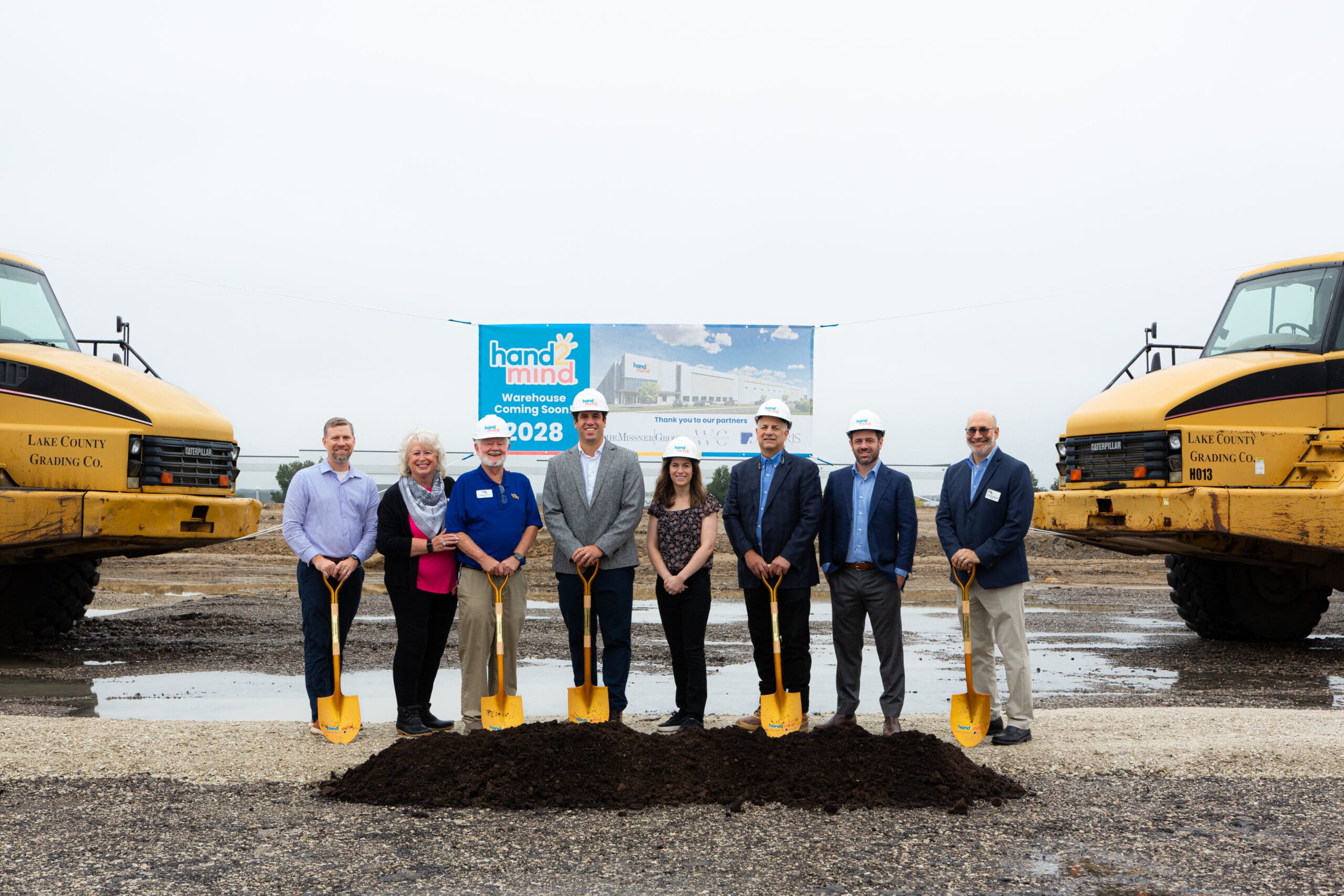
hand2mind Celebrates New Distribution Center in Vernon Hills

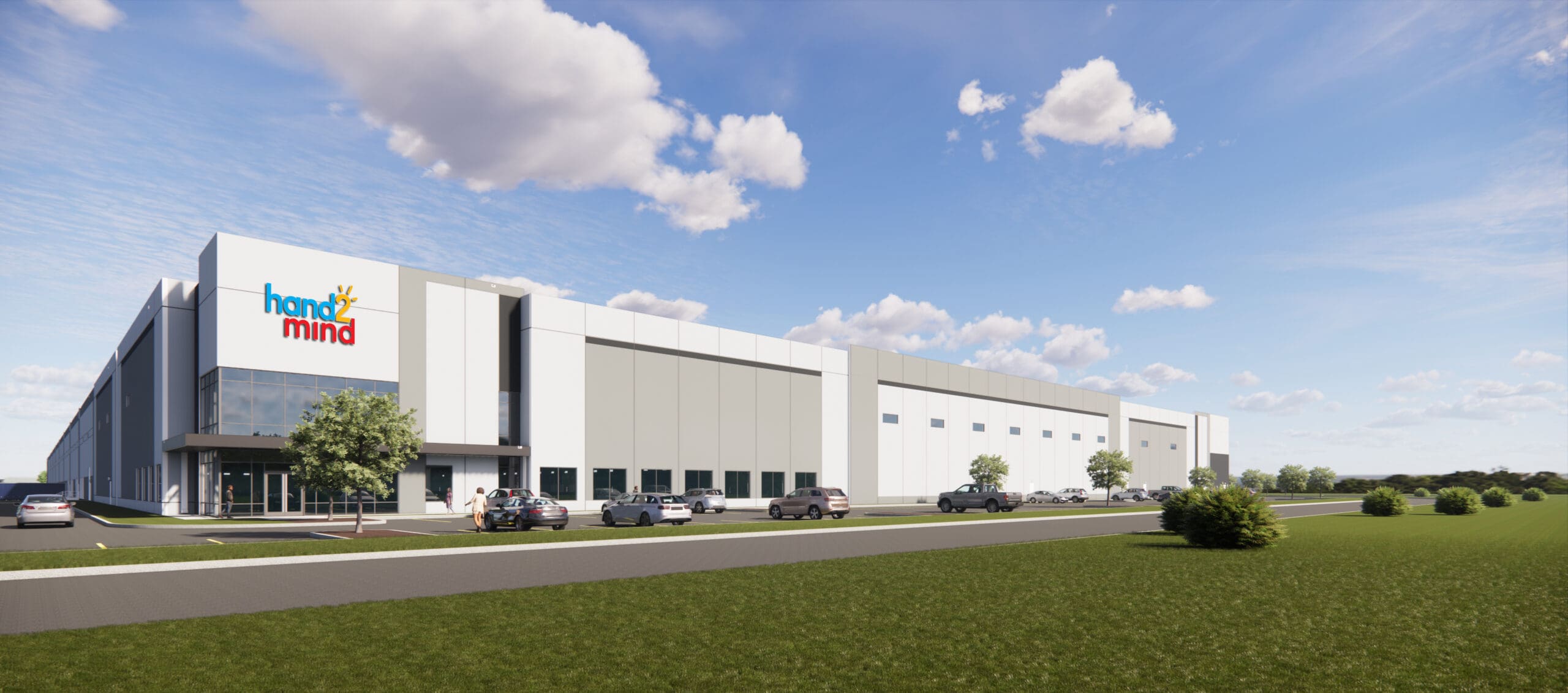
The nearly 700,000 sq-ft warehouse will bring together the hands-on learning company’s operations in one purpose-built facility and introduce dozens of new jobs in Vernon Hills, Illinois.

hand2mind. Inc., a leading provider of hands-on learning curriculum and educational toys for classrooms and homes, announced today its move to a new 698,360 sq-ft facility at 100 S. Milwaukee Ave in the Vernon Hills Industrial Park. Constructed on 35 acres at the site of the former American Hotel Register world headquarters, the building will serve as hand2mind’s primary distribution center, consolidating operations currently spread across four locations into a single facility. The project will support the creation of 37 new full-time jobs in Illinois across both office and warehouse operations.

hand2mind has been headquartered at 500 Greenview Court in Vernon Hills since 2000. The new facility will centralize receiving, inventory management, kitting, assembly, and shipping functions under one roof, enabling the company to operate more efficiently and scale to meet growing demand. As part of this investment, hand2mind has committed to retaining 288 existing Illinois jobs, reinforcing its long-term commitment to the state and the broader Chicagoland area. The company has been named to the Chicago Tribune Top Workplaces list for the past six years, an honor based entirely on employee feedback that recognizes organizations with exceptional workplace culture, engagement and leadership.

“We are thrilled to be able to expand our operations in our longtime home of Vernon Hills,” said Rick Woldenberg, Chief Executive Officer for hand2mind. “With our larger footprint, we will be able to create more Illinois jobs to meet growing demand for our products, and build a stronger foundation for our team, our customers and the communities we serve.”

Congrats to hand2mind on this exciting new chapter,” said Congressman Brad Schneider. “This expansion means good-paying jobs and a bolstered local economy right here in Vernon Hills. Thanks to the hard work of Rick and his dedicated team, more children and communities in Illinois and beyond will be able to enjoy their innovative and educational toys.”

“Vernon Hills is excited to welcome hand2mind’s new distribution center and celebrate the company’s continued growth in our community,” notes Vernon Hills Mayor Thom Koch, Jr. “This announcement reflects the strength of our business environment, our talented workforce, and the opportunities available for companies looking to grow in Lake County.”

The project is supported by the Illinois Department of Commerce and Economic Opportunity (DCEO) through the state’s Economic Development for a Growing Economy (EDGE) Program, which provides incentives to qualifying businesses making significant capital investments and creating or retaining jobs in Illinois.

“Through DCEO’s Economic Development for a Growing Economy Program, the State is supporting hand2mind as it deepens its roots and furthers its commitment to growing in Illinois,” said DCEO Director Kristin Richards. “The company’s investment in our state will create dozens of new jobs while retaining hundreds of jobs that benefit the Vernon Hills community.”

“Lake County is a premier destination for growing companies, and this expansion underscores the strength of our logistics infrastructure,” said Kevin Considine, president and CEO of Lake County Partners. “We’re proud to have joined our partners in supporting this project, and we look forward to the lasting economic impact this project will have through new jobs, continued investment, and opportunities for local residents.”

Cushman & Wakefield represented hand2mind in the real estate transaction and Lake County Partners introduced the company to DCEO. The building is a build-to-suit developed by The Missner Group, Avgeris and Associates, and Wylie Capital.

Lake County is An Investment in Future Business Success

For growing companies like hand2mind, Lake County, Illinois, is not merely a location—it is a competitive advantage. It’s a dynamic synergy of strategic geography, a magnet for world-class talent, a business-friendly economic climate, and a truly exceptional quality of life.

The consistent success stories, evidenced by the list of global powerhouses who call Lake County home, prove that this is where corporations come to achieve long-term growth, stability, and innovation. For any company looking to position itself at the strategic heart of the American economy, near a boundless talent pool, and within a community that supports both business and family, Lake County is the definitive location of choice. Click here to connect with us and learn how we can help your business grow in Lake County.

Belle Aire Creations Unveils THE BAC STUDIO, Expanding Its Creative Footprint in Lake County

For more than four decades, Belle Aire Creations has been turning creativity, science and craftsmanship into fragrances used by consumers around the world. Now, that tradition of innovation is taking another step forward in Lake County.

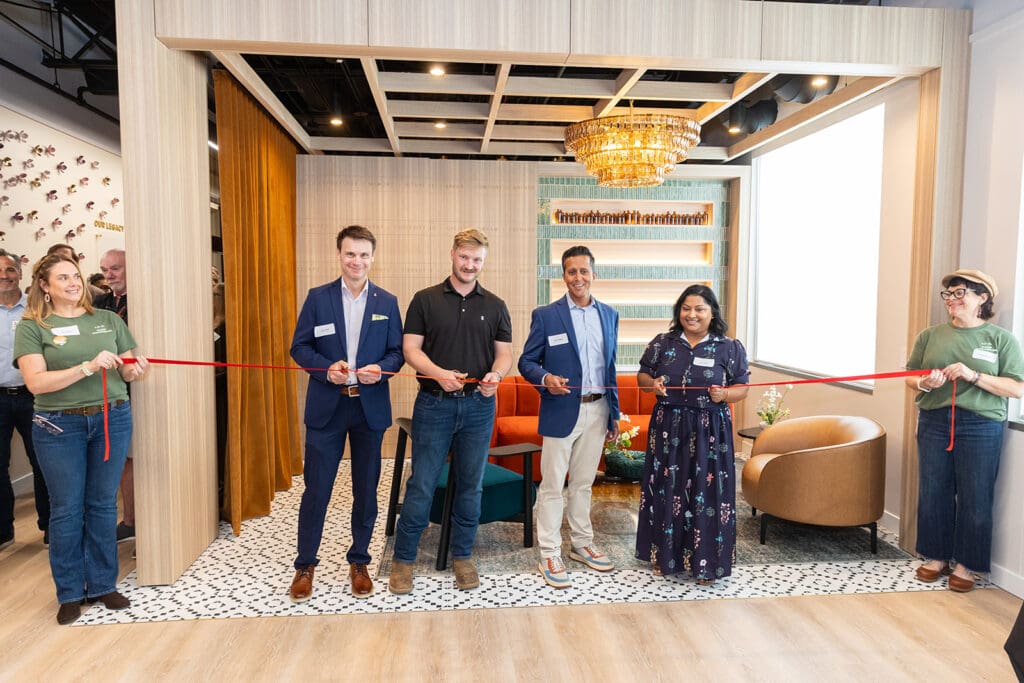
Leading fragrance manufacturer Belle Aire Creations recently celebrated the ribbon cutting and official unveiling of THE BAC STUDIO, a new 1,800 sq. ft. fragrance design and creative space located within the company’s Global Headquarters and Creative Center of Excellence in Libertyville.

The new studio represents more than an upgraded space. It is an investment in the people, ideas and collaborative process behind the next generation of fine fragrance—and another milestone in Belle Aire Creations’ continued growth in Lake County.

Founded in 1982, Belle Aire Creations has established itself as a premier full-service fragrance manufacturer. The company operates locations in Libertyville and Round Lake Park, and its continued investment in both communities demonstrates the strength of a homegrown company choosing to grow where it has built deep roots.

THE BAC STUDIO marks the company’s third major expansion in Lake County over the last 5 years. In 2021, Belle Aire Creations cut the ribbon on a manufacturing facility in Round Lake Park. This was followed with a 2025 groundbreaking for Porter East, a new 27,400 sq. ft. facility across the street designed to strengthen its logistics, storage and quality-control capabilities.

For Lake County Partners, these investments tell an important story about Lake County: when companies find the right combination of talent, infrastructure, community support and quality of life, they don’t simply locate in the community, they grow here.

Creating a New Space for Creativity

The new BAC STUDIO in Libertyville is designed specifically around the creative side of fragrance development.

Fine fragrance is about much more than a scent. It can communicate a brand’s personality, evoke memories, create an emotional connection and shape the way consumers experience a product.

The new studio gives Belle Aire Creations and its clients a dedicated environment to explore those connections from the earliest stages of development. The project also includes an updated Town Hall and collaborative gathering spaces, creating an environment designed for both creativity and connection.

Inside THE BAC STUDIO, fragrance can be explored through more than scent alone. Color, texture, finishes, materials and form all become part of the development conversation, giving clients an immersive way to imagine how a fragrance can translate into a complete brand experience.

That approach reflects the changing expectations of today’s brands.

Rather than simply developing a fragrance and handing over a finished formula, THE BAC STUDIO brings multiple disciplines together to help clients build a cohesive concept from the beginning. Perfumers, fragrance development experts, sourcing professionals, marketers, consumer insights specialists and designers work together as part of a connected process.

The work begins by understanding the brand: its positioning, its audience, its aspirations and the emotional response it hopes to create. From there, Belle Aire Creations’ team can develop a customized fragrance direction and translate that concept into a broader visual and emotional identity. That can include naming, packaging and vessel direction, color palettes, materials, storytelling, visual identity and design development.

“Today’s clients are looking for more than a fragrance submission – they are looking for a partner who understands where their brand is going,” said Jason Dhaliwal, COO of Belle Aire Creations. “Our goal is to become an extension of their team, combining customized fine fragrance, consumer understanding and design expertise to help bring a complete and compelling launch to market.”

It is a model built around collaboration—and one that places Lake County at the center of a highly specialized creative and manufacturing ecosystem.

Where Fragrance Meets Brand Experience

The launch of THE BAC STUDIO reflects the increasingly important role of consumer insights and market intelligence in product development.

Belle Aire Creations’ proprietary consumer research platform, METABELLE™, provides insights into changing consumer preferences and emerging market trends. Those insights can inform creative decisions alongside the expertise of the company’s perfumers, designers and development teams.

The result is a process that connects consumer understanding with creativity and technical expertise. For clients, that means the opportunity to work with one partner across multiple stages of development—from the initial fragrance concept through design and production support.

For Belle Aire Creations, it represents another way to deepen its capabilities and strengthen its position as a destination for customized fine fragrance development in the Midwest.

And for Lake County, it is another example of the sophisticated work taking place within the region’s manufacturing and innovation economy.

An Investment Built on Collaboration

The physical space itself reflects the same philosophy of collaboration that defines THE BAC STUDIO. The renovation incorporated sustainably sourced cabinetry and millwork alongside globally selected materials, including tile from Spain, countertops from Italy, handmade wall flowers from the United Kingdom and electrical components from Belgium.

At the same time, Belle Aire Creations partnered with companies throughout greater Chicagoland to bring the project to life. Approximately 20 contractors contributed to the renovation, with as many as nine specialized trades coordinating the details of the space. Hundreds of refinements were made throughout the design and construction process to ensure the finished environment reflected the company’s vision.

That local collaboration is an important part of the story.

Economic development is often measured in square footage, capital investment and jobs. Those measures matter. But projects like THE BAC STUDIO also demonstrate another dimension of economic development: the network of businesses, contractors, professionals and community partners that come together to help an existing company evolve.

Lake County Partners has seen that dynamic repeatedly as companies choose to reinvest in the county.

“Belle Aire Creations’ story is particularly meaningful because its Lake County presence has grown alongside the company itself,” said Ron Lanz, Lake County Partners’ Senior Director of Business Development. “We’ve celebrated each step along the way as the company has expanded in Round Lake Park and established its Global Headquarters and Creative Center of Excellence in Libertyville. This new studio highlights Belle Aire Creations’ deep commitment to our community and the power of local talent. We’re so proud that the company has reaffirmed Lake County’s role as its home.”

As Belle Aire Creations looks toward its next chapter, this latest expansion adds another layer to Lake County’s growing reputation as a place where established companies can find the ingredients that they need to innovate, collaborate and build for the future.

How Lake County Partners is Seizing the Economic Development Momentum

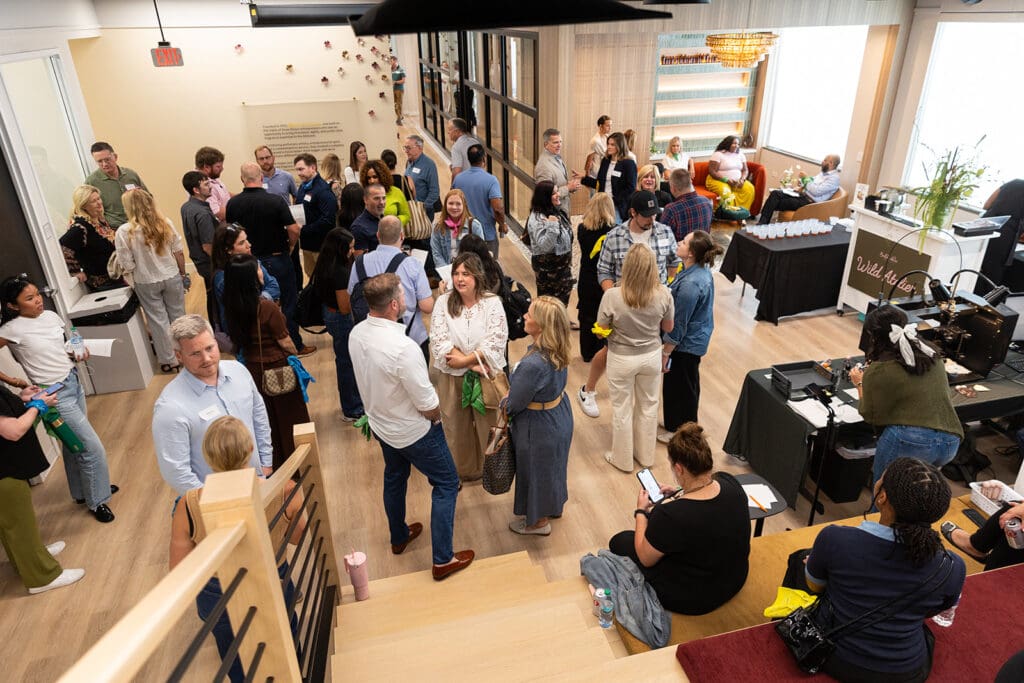
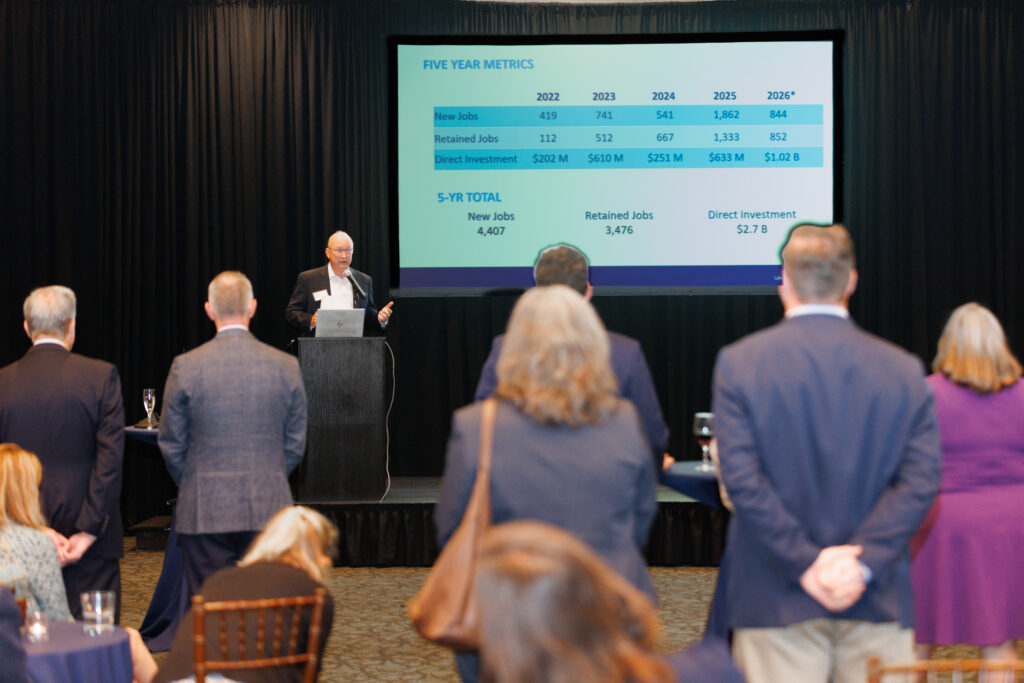
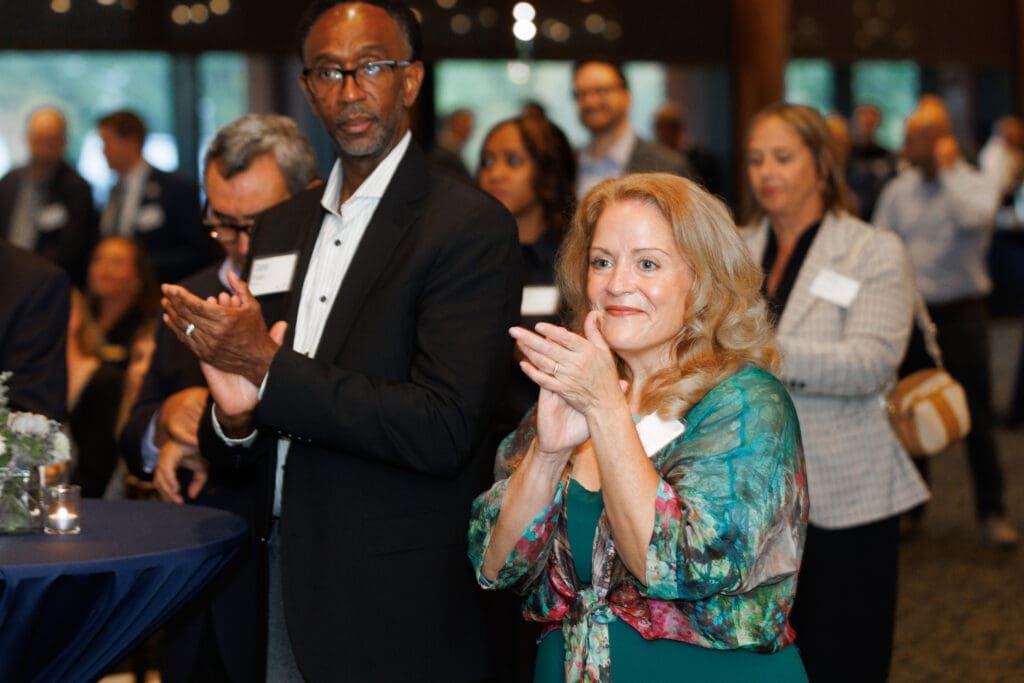
There are moments when a community has an opportunity to pause, take stock of where it stands and look ahead with renewed purpose. For Lake County Partners, the organization’s annual Invested Together event is a great time to do just that.

With the support of event sponsors, Abbott and Old National Bank, this special gathering brings together LCP’s most trusted partners – an assortment of business and civic leaders who are working together with purpose to shape Lake County’s economic future.

“I always look forward to this evening because it brings together different organizations, municipalities and sectors and unites us around a singular vision and purpose. We all have a stake in Lake County’s vibrancy and high quality of life,” notes Connie Lavin, Market President & Business Banking Director at Old National Bank. “Old National Bank is proud to be part of that conversation and to support the partnerships that help Lake County continue to grow and thrive.”

That shared sense of responsibility comes at an exciting time.

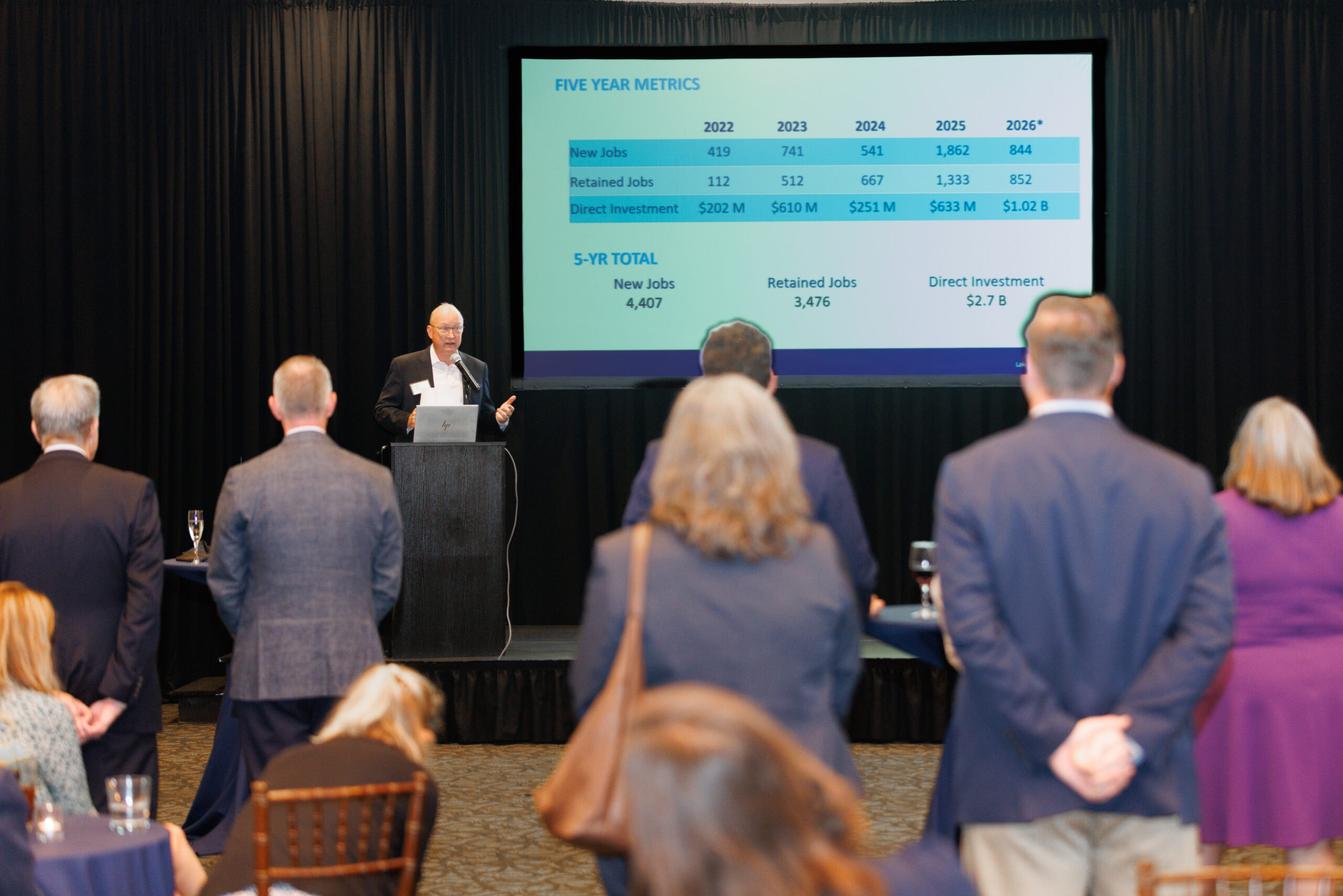
Over the last five years, Lake County has added more than 4,400 jobs and attracted approximately $2.74 billion in capital investment.

Those figures tell an important story, but the real impact goes well beyond the numbers. They represent businesses choosing to invest in the county, people finding rewarding career opportunities, families establishing roots and communities gaining confidence in their economic future.

The momentum is real. But the message from the evening’s speakers was equally clear: celebrating success is only the beginning. The next challenge is turning that momentum into long-term, inclusive and sustainable growth.

Economic Development is a Team Sport

For nearly 30 years, LCP has played a central role in bringing people and organizations together around economic development. That work goes well beyond recruiting companies. It involves connecting businesses with government, employers with educators and workforce organizations, and communities with developers and investors. The goal is to create an environment where good ideas can move from conversation to action.

That collaborative approach recognizes an important reality about economic development: companies need more than an attractive location. They need access to talent, infrastructure, transportation, education, housing and a high quality of life. Communities need employers and investment, but they also need the amenities, services and opportunities that make people want to live and build their futures there.

Lake County’s current success reflects years of work across all of those areas.

It also reflects the contributions of partners throughout the county. The evening was an opportunity to recognize the businesses, public officials, institutions and community leaders who have helped create the conditions for growth.

Thinking Beyond County Lines

Four years ago, Lake County Partners joined the City of Chicago, Cook County and the collar counties to create the Greater Chicagoland Economic Partnership. The premise was straightforward. When competing for investment from companies around the world, regional collaboration can tell a stronger story than individual communities working separately.

Companies considering an investment in the Chicago region are rarely thinking in terms of county boundaries. From an international perspective, the Chicagoland market is a connected economic ecosystem.

By presenting the region collectively, the Greater Chicagoland Economic Partnership has helped communicate that story to businesses around the world.

Since the birth of GCEP, the partnership has fueled nearly 400 Pro-Chicagoland Decisions (PCDs), representing 16,000+ new jobs across the region. The partnership has also expanded its international reach through trade missions and programs designed to introduce international companies to the opportunities available throughout Chicagoland.

In fact, the partnership has been so successful that it is in the process of being renewed for another three years, providing an opportunity to build on the progress already made.

The lesson is an important one: collaboration does not have to diminish competition. It can strengthen the entire region’s ability to compete for investment, talent and innovation.

Laying the Foundation for Future Growth

While Lake County is building on current momentum, the community is also looking ahead to the forces that will shape its next chapter. At the event, LCP announced plans to refresh its Comprehensive Economic Development Strategy (CEDS), the roadmap that has guided the organization’s economic development work over the past 4+ years.

The existing CEDS identified issues critical to Lake County’s long-term success and has helped shape much of the work undertaken since its creation. But the economic landscape has changed. Artificial intelligence, power infrastructure and utilities are among the issues that have become increasingly important since the current strategy was developed.

Refreshing the CEDS provides an opportunity to consider those emerging issues while reinforcing priorities that remain essential to Lake County’s future. Among those priorities are housing, early childhood education and coordinated workforce development.

The goal is not simply to create another strategic document. It is to create an actionable roadmap that reflects the community’s current needs, opportunities and aspirations — and one that can guide future collaboration and investment.

Most importantly, the CEDS is intended to belong to the entire Lake County community. That means continued engagement from the people and organizations who make up the county’s economic and civic ecosystem. Businesses, municipalities, educators, nonprofits, developers, investors and residents all have a role to play in identifying opportunities and turning them into results.

Building Economic Success Together

Ultimately, the Invested Together celebration offered both a celebration and a call to action.

Lake County has a strong foundation. The numbers demonstrate significant economic activity and investment. The county continues to benefit from talented people, strong institutions, diverse communities and a high quality of life. Regional partnerships are expanding the reach of local economic development efforts, while new strategies are being developed to address the challenges ahead.

But none of that happens automatically.

Economic development is the cumulative result of decisions made by businesses, educators, government leaders, community organizations and residents. It is the result of partnerships formed, ideas shared and problems tackled together.

The next chapter will require that same spirit of collaboration. Lake County’s long-term needs may require new approaches. Workforce development will require continued coordination. Housing, infrastructure and utilities will need to keep pace with growth. Emerging technologies will create both opportunities and questions. And the county will need to continue telling its story — locally, nationally and internationally.

Fortunately, Lake County already has an important advantage: a community of people who are willing to work together. That was perhaps the most important theme of the evening.

The future of Lake County is not being shaped by any one organization or sector. It is being built through the collective efforts of many people who recognize that their individual success is connected to the success of the broader community.

As Lake County Partners looks ahead to the next phase of its work, the focus is clear: build on the momentum, address the challenges and keep creating opportunities for businesses, workers and families to grow. There is plenty to celebrate. And there is always more work to do — together.

How City of Hope is Helping Shape Zion’s Future & Demonstrating that Healthcare is Economic Development

When communities talk about economic development, the conversation often centers on manufacturing hubs, corporate headquarters, technology, retail development and infrastructure. Those investments matter, of course. But there is another powerful economic engine that deserves equal attention: healthcare.

A world-class healthcare institution does much more than treat patients. It creates jobs, attracts highly-skilled professionals, supports surrounding businesses, encourages innovation, keeps economic activity close to home, and strengthens the overall quality of life that makes a community competitive.

That is front and center in Zion, where City of Hope® Cancer Center Chicago has become an important part of the region’s healthcare and economic landscape. City of Hope’s presence in Lake County goes beyond medical care. It represents an investment in people—and, by extension, an investment in the future of the community.

Healthcare Makes Communities More Competitive

For communities competing for businesses, residents and investment, quality healthcare is an increasingly important asset. Companies want to locate where their employees and families can access high-quality medical care. Professionals want to live in communities where advanced healthcare is available close to home. And families making decisions about where to live consider the strength of local institutions, schools, amenities and healthcare systems.

In that sense, healthcare can become part of a community’s competitive advantage.

City of Hope is particularly well positioned to contribute to that advantage because its mission extends beyond conventional cancer treatment. City of Hope Chicago is part of one of the nation’s largest cancer research and treatment organizations, with more than 2,000 cancer experts and a national network focused exclusively on cancer. Its research enterprise includes more than 790 clinical studies each year, giving patients opportunities to access emerging therapies before they become the standard of care.

The City of Hope network is also an international leader in cellular therapies, including CAR T therapy, and has performed more than 20,000 bone marrow transplants. Bringing that level of expertise to Lake County means patients in the region do not necessarily have to travel elsewhere to find highly specialized cancer care.

“City of Hope is dedicated to bringing the highest standard of cancer care to every person who needs it,” notes Pete Govorchin, president of City of Hope Cancer Center Chicago. “Together, we’re breaking down barriers to early detection, timely treatment and prevention for some of the most vulnerable members of our community.”

Healthcare Attracts & Nurtures Talent

Leading-edge cancer treatment not only attracts talent, it nurtures it. Physicians, nurses and other clinical professionals are only part of the equation. Major healthcare institutions employ people in information technology, finance, human resources, facilities, food services, administration, communications, research, patient services, security, maintenance and countless other fields. That means the economic impact of a healthcare institution extends far beyond the people wearing scrubs.

City of Hope’s approach to attracting and retaining talent is particularly relevant to Lake County’s broader economic development goals. The organization emphasizes an inclusive and collaborative workplace, employee recognition, professional development and opportunities for employees to participate in community service.

This year, City of Hope Chicago was named one of Modern Healthcare’s Best Places to Work in U.S. Healthcare. Together with the City of Hope Lennar Foundation Cancer Center in Orange County, the Lake County hospital ranked among the top 150 healthcare organizations nationwide—and was the only cancer-center organization represented on the list.

That kind of reputation matters. A community that can attract highly educated physicians, scientists, nurses, researchers, technicians and other professionals becomes more attractive to other employers and institutions looking for talent. In economic development, talent attracts investment—and investment attracts more talent.

“Lake County’s long-term economic success is reliant on people. Our community is known for its talent, and we are fortune to have a strong ecosystem of leaders who work together to ensure that Lake County’s workforce has the skills and training needed to support rewarding careers and sustain business growth,” notes Kevin Considine, Lake County Partners’ president and CEO. “City of Hope is one of those leaders that works locally to cultivate talent and create meaningful career pathways.”

Earlier this year, City of Hope hosted students from Lake County Tech High School, giving them opportunities to meet clinical and non-clinical professionals and gain firsthand exposure to the many careers involved in cancer care.

That kind of experience can change a student’s understanding of what a career in healthcare looks like. A student may arrive thinking healthcare means becoming a doctor or nurse and leave realizing there are opportunities in technology, research, laboratory science, finance, human resources, facilities, communications, patient services and dozens of other fields. Those connections are precisely what workforce development is about: helping young people see a path from education to meaningful employment.

City of Hope Chicago leaders are also participating in broader workforce development efforts. For example, Amy Van Strien, director of human resources, serves on the Lake County Workforce Development Board, helping connect individuals with career opportunities while supporting the workforce needs of local employers and demonstrating the important role that major institutions play in the community’s long-term success.

Healthcare Drives Innovation

Few industries demonstrate the connection between economic development and innovation as clearly as healthcare. At City of Hope, research and patient care are closely connected. The institution’s national clinical trials network provides patients with access to emerging treatments, while researchers work to translate discoveries into therapies.

Importantly, innovation has an economic multiplier effect.

Research requires scientists, technicians, data specialists and other professionals. Clinical trials require administrative and support functions. New treatments require sophisticated equipment, technology and services. Partnerships with educational institutions and other organizations create additional opportunities for collaboration.

Over time, that ecosystem can help establish a community as a place where new ideas are developed, tested and brought to patients. For Lake County, that is an important distinction. Economic development is not only about attracting the next business. It is also about building the conditions that allow innovation-oriented industries to grow. Healthcare is one of those conditions.

City of Hope’s Investment in Lake County

Across its three Illinois locations, City of Hope offers three linear accelerators for radiation therapy, 11 oncology procedure suites, 55 infusion center bays, five oncology operating suites and 73 private oncology beds.

The center also provides access to nationally recognized programs, including the only comprehensive blood cancer program offering the full spectrum of stem cell transplants midway between Chicago and Milwaukee. Its breast cancer program has earned Certified Quality Breast Cancer Center of Excellence™ recognition, placing it among fewer than 10 comprehensive programs nationally recognized at that level by the National Quality Measures for Breast Centers® Program.

Those capabilities make City of Hope an important healthcare resource for Chicagoland and southeast Wisconsin. But the institution’s relationship with the region goes beyond the walls of its cancer center.

In 2025, City of Hope participated in more than 475 outreach events and activities, providing education, expertise and volunteers while reaching more than 120,000 people. That community engagement is another form of economic development.

Healthy communities are stronger communities. Public education about cancer prevention and screening can help people make informed decisions about their health. Wellness and nutrition programs can give residents practical tools for healthier living. Community partnerships can connect institutions with organizations already working to improve quality of life.

Initiatives such as monthly wellness and nutrition workshops with interactive education and cooking demonstrations illustrate an important point: economic development is not only about buildings and balance sheets. It is also about whether a community is healthy, educated, connected and capable of supporting the people who live and work there.

Building a More Compassionate Community

Healthcare makes communities more compassionate. Cancer affects virtually every community, touching patients, spouses, children, parents, friends and coworkers. Having advanced cancer care nearby means that families can spend less time traveling for treatment and more time together.

City of Hope’s Cancer Fighters® network, with more than 18,000 members, reflects that broader understanding of cancer care: patients and caregivers need support in addition to medical treatment. Founded in 1990 by a group of patients seeking a way to support and learn from other cancer patients and caregivers, the nationwide community is dedicated to the idea that no one ever fights cancer alone.

In addition to leading-edge cancer treatment and technology, the hospital is focused on providing compassionate care. It is through both of these that, City of Hope Chicago has consistently delivered patient satisfaction scores exceeding 95%.

It is understandable that cancer diagnoses bring anxiety, which is why City of Hope Chicago focuses on providing compassionate care that takes out the administrative tasks for patients – this includes verifying insurance and scheduling appointments for patients. Also, speed to care is prioritized. The hospital’s access model includes appointments in as little as 24 hours, same-day diagnostics, rapid radiology results within 48 hours and pathology results in a week or less.

The Community Benefits of High-Quality Healthcare

“A culture of care can shape a community,” notes Zion Mayor Billy McKinney. “Lake County is stronger because people know their neighbors have access to exceptional healthcare. They also know that employers like City of Hope encourage their employees to volunteer and give back. City of Hope is another fine example of how Lake County has become one of the leading health care hubs in the country.”

For Zion and Lake County, the opportunity is not simply to have a great healthcare provider like City of Hope in the community. The opportunity is to build around it—to connect healthcare with education, workforce development, business attraction, innovation and quality of life. Fortunately for the community, City of Hope Chicago is a leader in forging these connections. To learn more about City of Hope Chicago, click here: https://www.cityofhope.org/locations/chicago

Why Lake County, Illinois is a Top Choice for Corporate Headquarters

With one of the highest concentrations of Fortune 500 headquarters in the Midwest, Lake County has solidified its reputation as the location of choice for global leaders seeking a competitive edge, a world-class workforce, and an unparalleled quality of life.

Nestled strategically north of the global commerce hub of Chicago, Lake County, Illinois, is not just a high-end Chicago suburb. It’s a powerful economic engine and a premiere corporate destination.

The decision to locate a corporate headquarters is a multi-faceted calculation, weighing everything from talent and quality of life to tax rates and logistics. For countless global enterprises, Lake County doesn’t just meet these requirements—it consistently exceeds them.

Why Fortune 500 Businesses Choose Lake County, Illinois

The Strategic Location: Crossroads of the Midwest

At the heart of Lake County’s appeal is its geography. The community is a critical link in the North American supply chain and corporate network, offering immediate access to both regional and international markets.

Midwest Market Access

Strategically located in the middle, Lake County provides one-day ground transportation access to more than 50% of North America’s population. This makes it an ideal hub for corporate headquarters and quick-turn business travel as well as distribution and logistics.

Global Connectivity

Corporate travel and global distribution are seamless, thanks to proximity to three major international airports: O’Hare International Airport (ORD), Chicago Midway International Airport (MDW), and Milwaukee Mitchell International Airport (MKE). Additionally, the Waukegan National Airport (UGN) provides high-end corporate aviation services with a new U.S. customs building.

Robust Infrastructure

Lake County is interlaced with world-class transportation networks. Interstate 94 (I-94) is the spine of the region, connecting businesses directly to key markets. The region also boasts reliable rail service, including being the only state crossed by all seven of the nation’s Class I rail lines, and convenient access to ports like the Waukegan Port District. For employees, the Metra commuter railsystem features four lines with 32 stations, coupled with Pace bus services, ensuring regional talent can commute efficiently.

A Highly Skilled Talent Pool

A headquarters is only as strong as its people, and Lake County’s greatest asset is its deeply talented and highly-educated workforce. This isn’t a passive advantage—it’s the result of decades of strategic investment in education and a vibrant regional economy that attracts and retains the best and brightest.

Exceptional Educational Attainment

Nearly 57% of Lake County residents over the age of 25 have an associate’s degree or higher, a figure that significantly outpaces the national average of 45.7%. Chicagoland is also a top destination for Midwest grads. This deep pool of knowledge workers is primed for roles in high-value and cutting-edge industries.

Education-to-Career Pipeline

The ecosystem of educational institutions works in tight alignment with industry needs. Institutions like the College of Lake County (CLC), Lake Forest College, and Rosalind Franklin University of Medicine and Science actively partner with local businesses to cultivate the next generation of professionals. CLC, for instance, offers specialized technical courses in high-demand fields such as robotics, advanced manufacturing, and laser photonics.

Industry Specialization

The workforce is particularly robust in multiple key sectors, creating powerful cluster effects that attract major corporate offices, particularly in life sciences and pharma. Lake County is a global destination for pharmaceutical and medical instrument companies, and it is home to more than 100 pharmaceutical companies and over 700 companies in medical device/precision tooling. This concentration of expertise drives innovation and high average wages in the sector.

Advanced Manufacturing and Technology

Lake County has become a hotbed for specialized manufacturing and logistics, pivoting to capture new opportunities in e-commerce and technology infrastructure.

Favorable Business Climate and Ecosystem

Lake County has cultivated an environment where enterprise can thrive, balancing a pro-business approach with collaborative public-private partnerships. The result has now been recognized nationally, with Lake County being named a Top 10 County in the U.S. for Economic Development by Site Selection magazine.

Competitive Cost Structure

While offering the business, workforce, and cultural advantages of a world-class metropolitan area, Lake County provides them at a fraction of the cost compared to coastal metros and even downtown Chicago. The overall cost of doing business remains competitive, helping to boost corporate profitability.

Proactive Economic Development

Organizations like Lake County Partners work closely with county and municipal governments to ensure an environment of continuous growth and investment. This includes programs for business retention, attraction, and targeted workforce training initiatives like the Incumbent Worker Training Program, which can help businesses secure reimbursement for training existing staff.

Diverse Set of Local Corporations

The presence of major corporate neighbors creates a strong network for collaboration, supply chain reliability, and talent sharing. In fact, no one sector is greater than 13% of the economy, which means that you can find both customers and suppliers here.

The list of well-known businesses with U.S. headquarters in Lake County is a testament to its draw, including:

  • Walgreens
  • AbbVie
  • Abbott Laboratories
  • CDW
  • W.W. Grainger
  • Baxter International
  • Packaging Corporation of America
  • Fortune Brands Innovations
  • Brunswick
  • Camping World
  • Maclean Fogg
  • Sysmex
  • Lundbeck
  • Fresenius Kabi

Unmatched Quality of Life: Attracting and Retaining Executives

The modern workforce, particularly top-tier talent and corporate executives, demands a high quality of life. Lake County’s blend of nature, community amenities, and vibrant residential options makes it a powerful asset in the competition for human capital.

The “Lake” in Lake County, Illinois

The county is home to over 170 lakes and miles of scenic Lake Michigan shoreline, providing unparalleled access to recreation, nature, and a respite from urban density. The vast network of over 550 miles of trails and bikeways offers significant recreational opportunities.

Top-Ranked Communities

Lake County boasts numerous municipalities that are consistently ranked among the top in the nation for their exceptional schools, healthcare access, public safety, and fiscal stability. This makes it an ideal place for employees to raise a family.

Vibrant Mixed-Use Development

Recognizing the evolving needs of the modern workforce, the county is actively investing in the transformation of commercial assets into resilient, mixed-use districts. These developments combine office space with housing, dining, and recreation, creating walkable, community-engaged environments that modern employees value highly.

Work-Life Balance

The strong balance of diverse housing options, leading employers, and abundant outdoor activities allows individuals to achieve the career they want alongside the life they desire—a crucial factor in executive-level decisions.

Lake County is An Investment in Future Business Success

For Fortune 500 companies and large corporate offices, Lake County, Illinois, is not merely a location—it is a competitive advantage. It’s a dynamic synergy of strategic geography, a magnet for world-class talent, a business-friendly economic climate, and a truly exceptional quality of life.

The consistent success stories, evidenced by the list of global powerhouses who call Lake County home, prove that this is where corporations come to achieve long-term growth, stability, and innovation. For any company looking to position itself at the strategic heart of the American economy, near a boundless talent pool, and within a community that supports both business and family, Lake County is the definitive location of choice. Click here to connect with us and learn how we can help your business grow in Lake County.

How Lake County Partners Makes Lake County’s Economy Stronger

Lake County’s strongest economic years aren’t happening by accident—they’re the result of deliberate investments in talent, housing, infrastructure, and partnerships that position the community for long-term growth. Lake County Partners is building this foundation for competitiveness by advancing many of the priorities identified in Lake County’s Comprehensive Economic Development Strategy (CEDS). Through initiatives focused on these priorities, and leveraging cross-sector collaboration, LCP is taking a proactive approach to strengthening Chicagoland’s economic future.

By convening municipalities, employers, educational institutions, developers, and community organizations around shared goals, LCP ensures that Lake County remains economically resilient, talent-ready, and positioned for sustainable growth. These efforts not only support today’s business climate, but also create the conditions necessary for future investment, opportunity, and high quality of life across the county. Here’s a broad look at three overarching initiatives that achieve these aims:

Fueling Housing Growth

In order for Lake County to attract and retain both talent and businesses, it must have more available housing, including a diversity of housing types that provide options for households at different life stages, ages, incomes, and sizes. Our 2023 Housing Study showed that by 2027, Lake County will be short over 11,000 market rate homes, and 7,000 income qualified affordable homes.

LCP is taking a proactive approach to fueling housing growth by supporting several initiatives, including Housing Lake, which convened more than 175 stakeholders — including municipalities, developers, employers, and nonprofits — to create a collaborative roadmap for expanding attainable housing across Lake County.

Building on that effort, LCP also hosted a multifamily networking session that brought municipal leaders together with developers to discuss ready-to-build sites and accelerate real development opportunities. By breaking down silos, fostering public-private partnerships, and aligning housing development with workforce and economic needs, LCP is helping create the conditions for sustainable growth, stronger talent attraction, and long-term regional competitiveness.

Lake County is making significant progress in addressing its housing needs through an unprecedented wave of residential development activity across the community. Municipalities are advancing a diverse mix of projects, including multifamily developments, workforce housing, affordable housing, senior living communities, and mixed-use neighborhoods that expand housing choices for residents at all stages of life.

These projects reflect a growing recognition among local leaders that increasing housing supply is essential to supporting economic growth, attracting and retaining talent, and maintaining vibrant communities. Backed by this strong collaboration, the county is translating housing studies and policy recommendations into tangible developments, demonstrating meaningful momentum toward closing housing gaps and creating more attainable housing opportunities for current and future residents. Click here to learn more about recent housing development projects.

Maximizing Homegrown Talent

Lake County’s long-term economic strength depends on its ability to cultivate and retain homegrown talent, and local educators are working alongside other workforce ecosystem partners to build one of the most collaborative training pipelines in the region. Local leaders are at the forefront of a career pathway strategy that connects students directly with high-demand opportunities in manufacturing, healthcare, life sciences, and skilled trades.

Programs like Navig8 Lake — which now engages 6,000+ students and 140 companies — are giving young people hands-on exposure to local business leaders earlier than ever before, while platforms like SchoolLinks are streamlining connections between employers and educators.

At the same time, initiatives like the Lake County Manufacturing Alliance and workforce grant programs are helping businesses actively participate in training, mentorship, internships, and career development. Together, these efforts are creating a scalable, regional model for workforce development that positions Lake County to grow and compete for decades to come.

Lake County has established itself as a national leader in education. Local institutions are investing in the next generation workforce by strengthening connections between training and industry. As a result, Lake County is benefitting from new approaches to career pathways, technical training, dual-credit programs, and employer partnerships that are preparing students for high-demand fields including healthcare, manufacturing, life sciences, and technology. Here’s a look at what Lake County’s major educational institutions are doing to grow talent:

College of Lake County

In 2025, the College of Lake County (CLC) continued development of its Urban Farm Center, a first-of-its-kind facility designed to advance sustainable agriculture education, workforce training and community engagement. The center is expected to open in the fall of 2026.

CLC also expanded apprenticeship opportunities through a partnership with Advocate Health, celebrating the launch of a criminal justice apprenticeship program that creates new career pathways into healthcare security and public safety. Advocate apprentices join a growing network of students who have participated in CLC apprenticeship programs across multiple industries.

As a key partner in Illinois’ Climate and Equitable Jobs Act (CEJA), CLC provided training and career pathways that prepared 146 residents for emerging opportunities in the clean energy sector. Further strengthening the talent pipeline, CLC reached record levels of dual credit enrollment, providing more than 5,600 high school students with access to college coursework and career-focused learning opportunities.

Lake County Tech Campus

The Tech Campus proudly served 2,300+ students during the 2025-2026 school year. The school recognized 300+ students at a Student Awards Night, and celebrated the accomplishments of students who competed at SkillsUSA. Tech Campus had nearly 450 students qualify for National Technical Honor Society, a prestigious honor based upon skills and academic process throughout student tenure.

This school year also saw 300+ students complete a 60-hour internship with a business partner, completing real-world hands on experiences in local business throughout Lake and McHenry counties. These opportunities reflect the Tech Campus’ ongoing commitment to being one of the Midwest’s premier career and technical education training facilities. Guided by its “Teach, Establish, Connect, and Honor” framework, the Tech Campus continues to connect industry leaders with students, especially with the continued growth of its Give Me TEN+ TECH 50 work-based learning program.

Moving into 2026-2027, the Tech Campus plans to expand its robust internship experiences and program engagement.

Rosalind Franklin University of Medicine & Science

Rosalind Franklin University’s Helix 51 biomedical incubator helps scientists make the leap from discovery to commercialization of urgently needed new therapeutics and diagnostics. In its 7 years of operations, Helix 51 has ushered in 30+ startups from a wide variety of institutions including:

  • University of Chicago
  • Lurie’s Children’s Hospital
  • Endeavor Health
  • Advocate Aurora Healthcare
  • GE Healthcare
  • Northwestern University

In addition to leveraging local talent pipelines, Helix 51 also welcomed its first international company, from Mexico. It is the home of 6 disease research centers, a clinical immunology laboratory and two larger commercial tenants: Tolmar (originally from Colorado) and the Chicago Clinical Research Institute.

Creating Space to Grow

Working alongside educators, nonprofits, employers, and public-sector leaders, LCP is helping advance solutions around affordable childcare, early childhood education, and long-term talent development — recognizing that economic competitiveness starts with strong communities and access to opportunity at every stage of life.

Recent milestones like Start Early’s launch of Educare Lake County in Zion represent a transformational investment in early learning and family support, expanding access to high-quality education for young children while strengthening the county’s future workforce pipeline.

At the same time, organizations like Reading Power and initiatives like the Dolly Parton’s Imagination Library, led by the Regional Office of Education, ensure that children collective efforts like these are creating a stronger foundation for families, preparing the next generation for success, and reinforcing Lake County as a place where residents can build long-term futures.

How Do These Initiatives Factor Into Business Success?

Ultimately, the success of these initiatives can be measured by their impact on business success. Companies thrive when they can access a skilled workforce, attract and retain employees, and operate in communities that offer a high quality of life. Expanding housing options helps employers recruit talent by ensuring workers can afford to live near their jobs. Strengthening education and workforce development pipelines provides businesses with the skilled employees they need to grow. Investments in childcare, early learning, and community support services reduce barriers to workforce participation and help families succeed.

Together, these efforts create the conditions that businesses look for when making investment and expansion decisions: a strong talent pipeline, vibrant communities, and a stable foundation for long-term growth. By advancing these interconnected priorities, Lake County is not only addressing today’s challenges but also building the competitive advantages that will support business success and economic prosperity for years to come.

No single organization can solve housing shortages, workforce challenges, educational inequities, or childcare gaps alone. Meaningful progress requires coordination across sectors, and Lake County continues to demonstrate the power of collaborative leadership. By bringing together businesses, educators, developers, nonprofits, municipalities, and community organizations around shared priorities, LCP is building the foundation for long-term economic prosperity.
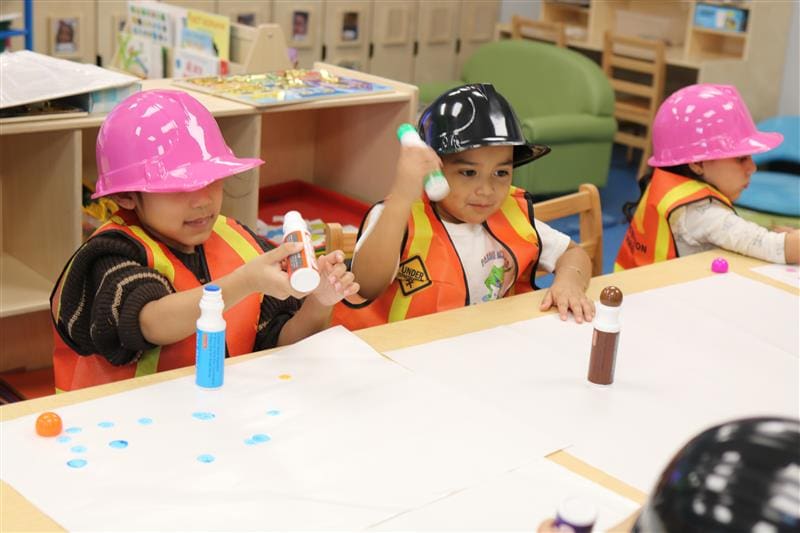
The initiatives highlighted here reflect more than individual successes—they represent a collective commitment to creating a county where businesses can grow, residents can thrive, and future generations can access opportunity. As these partnerships continue to evolve, Lake County is well-positioned to remain a competitive, innovative, and resilient place to live, work, and invest.

A Strong Economy Starts with Early Childhood Education & Access

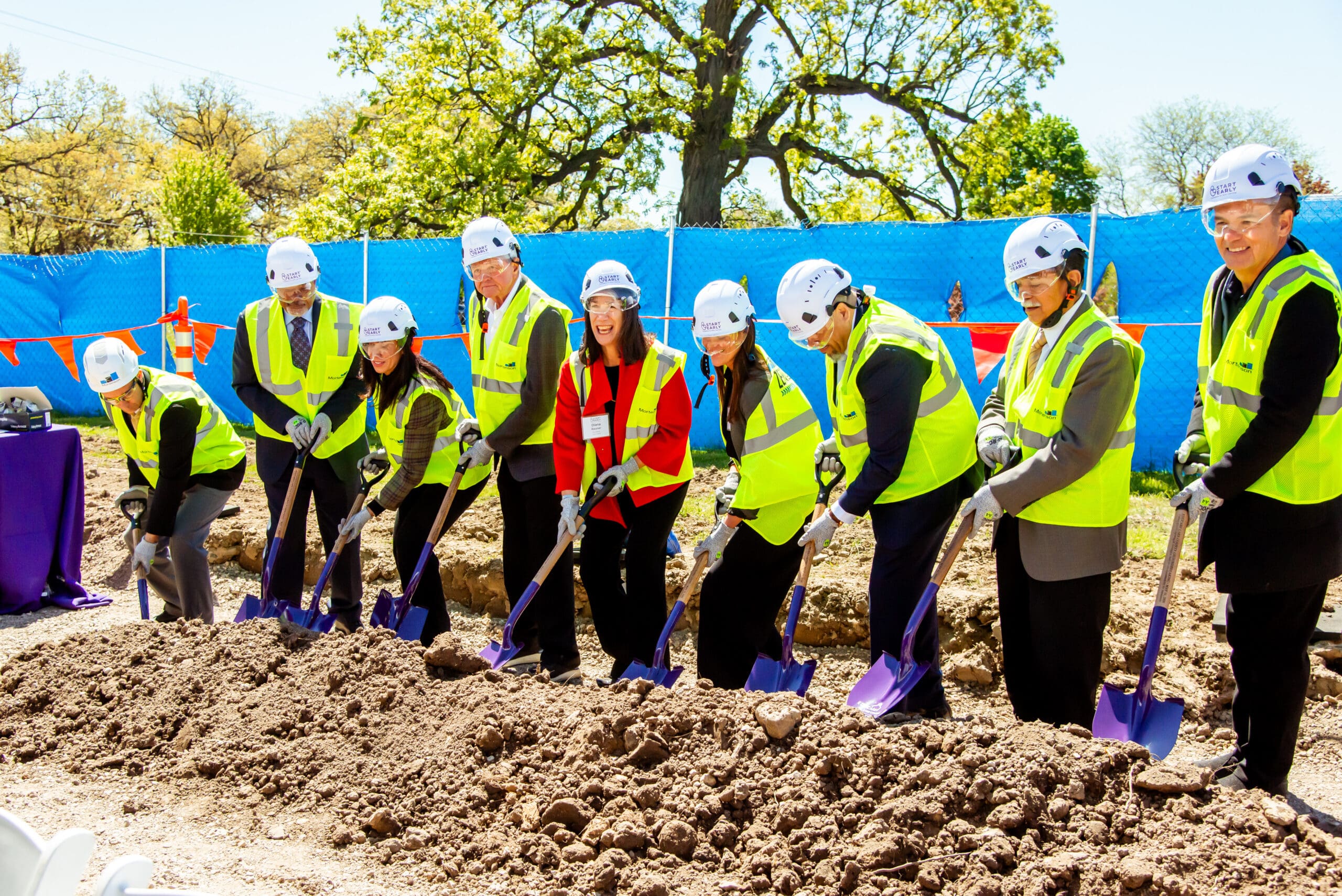
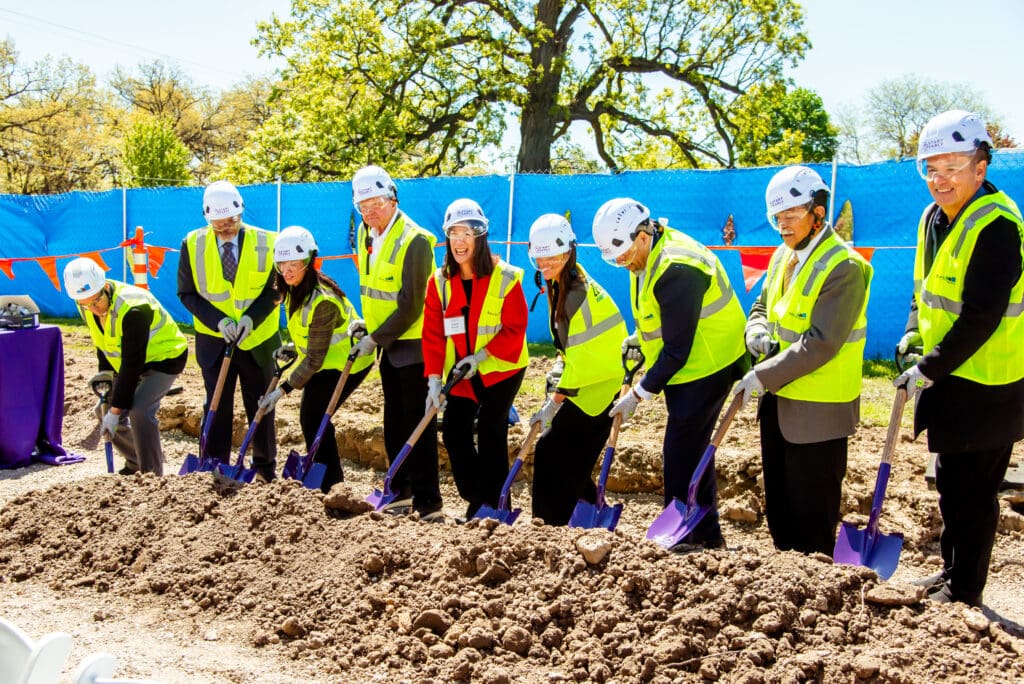
The groundbreaking of Start Early’s new Educare Lake County birth-to-age-5 program in Zion represents far more than the construction of a new school building. It is an investment in workforce development, economic competitiveness, community stability, and the long-term prosperity of Lake County.
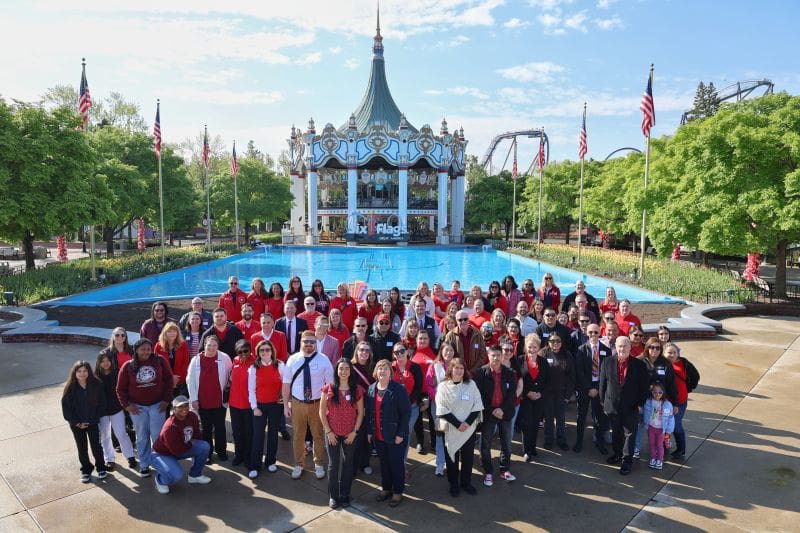
Too often, early childhood education is discussed only through the lens of education policy or family services. In reality, access to affordable, high-quality early learning is foundational economic infrastructure. Just as roads, broadband, and utilities enable commerce and business growth, early childhood systems enable parents to participate in the workforce, employers to attract talent, and children to become the skilled workforce of the future.

The new Educare Lake County center represents a strategic response to one of the most urgent economic challenges facing communities across the country: the growing gap between workforce needs and childcare availability.
According to Start Early, the new 38,000-square-foot birth-to-age-5 school will serve 174 children and families through full-day, year-round programming when it opens in 2027. It will include nurturing classrooms, experienced, bilingual educators and family support services in a modern learning environment build specifically for infants, toddlers, and preschoolers and those who care for them.

“Educare Lake County represents what is possible when communities come together around a shared commitment to children and families,” Start Early President Diana Rauner said. “The Educare model’s strength has always come from listening to and learning alongside the communities it serves. We are proud to partner with families, providers and local leaders across Lake County to help build a program that reflects the needs and hopes of the community and expands access to the high-quality early care and learning every child deserves.”

“The groundbreaking of the new Start Early Educare Center marks a transformational investment in Zion’s children, families, and future workforce,” said Mayor Billy McKinney. “Access to high-quality early childhood education creates stronger outcomes for students, supports working families, and strengthens the long-term vitality of our community. We are proud to welcome this important resource to Zion and grateful for the partnerships helping make this vision a reality.”

Importantly, the program is a strategic step forward in addressing the gaps in childcare access and early education that were first identified in Lake County’s Comprehensive Economic Development Strategy.

This reality not only carries major economic opportunities but serves as an inspiration for future child care developments across Chicagoland.

Childcare is Workforce Infrastructure

Across the country, employers continue to struggle with labor force participation, retention, and talent recruitment. In many cases, the inability to secure reliable childcare prevents parents—especially women—from fully participating in the workforce.

“For Lake County, this issue directly intersects with the goals outlined in the CEDS, which emphasizes workforce development, talent attraction, economic inclusion, and long-term regional competitiveness,” notes Steve DeBretto, Lake County Partners’ Director of Strategic Initiatives. “A modern economy cannot function efficiently if working families lack access to dependable early childhood care.”

When childcare systems fail, businesses feel the effects through:

  • Increased absenteeism
  • Higher employee turnover
  • Reduced workforce participation
  • Difficulty recruiting talent
  • Lower productivity

Communities also experience broader ripple effects, including reduced household earnings, lower consumer spending, and widening inequities.

Educare Lake County directly addresses these challenges by expanding access to reliable, high-quality early learning opportunities that support both children and working families. This is especially important in communities like Zion, Waukegan, and Beach Park, where workforce participation and economic mobility are deeply connected to family support systems and educational opportunity.

A Thriving Community Begins in the Cradle

The economic impact of early childhood education extends far beyond childcare access. Research consistently shows that investments in quality early learning generate long-term economic returns through improved educational attainment, higher lifetime earnings, reduced public assistance dependence, and stronger workforce readiness.

Educare Lake County highlights data showing that children who attend quality early learning programs are:

  • 25% more likely to graduate high school
  • Up to 25% more likely to earn higher wages as adults
  • 400% more likely to earn a college degree

These outcomes are not simply educational benchmarks—they are indicators of future economic performance. Regions that invest in early childhood education are effectively investing in:

  • Future labor force quality
  • Entrepreneurship potential
  • Household income growth
  • Community health outcomes
  • Reduced social service costs
  • Long-term economic resilience

All of this directly aligns directly with Lake County’s broader economic development priorities, which emphasize inclusive growth, talent pipeline development, and creating pathways to opportunity for residents across all communities.

Economic competitiveness increasingly depends on human capital. Communities that cultivate strong educational foundations early are better positioned to attract employers, retain residents, and sustain innovation over time.

Building a Stronger Talent Pipeline

One of the most important aspects of the Educare Lake County project is its focus on workforce development within the early childhood sector itself.

“Start Early is eager to provide coaching, professional development and career pathway opportunities for educators and will work with local partners to address longstanding workforce challenges, including low wages, limited access to education and high turnover across the early childhood field,” notes Diana.

This matters because the childcare workforce is itself a critical economic sector. Many communities face severe shortages of qualified childcare professionals, which limits the availability of care even when demand exists. Without enough educators, childcare centers cannot expand enrollment capacity, further constraining workforce participation among parents.

Educare Lake County’s approach recognizes that solving the childcare crisis requires strengthening the childcare workforce alongside expanding facilities and services.

This strategy mirrors broader workforce goals related to expanded career pathways, workforce participation, talent retention and equitable opportunity. By investing in children AND educators, Lake County is investing in a sustainable system rather than a temporary solution.

Public-Private Partnerships Drive Community Transformation

Another important takeaway from the Educare Lake County initiative is the role of collaboration. The project is supported by philanthropic leaders, local government, nonprofit organizations, schools, and community stakeholders working together toward a shared vision.

That collaborative model reflects the increasingly regional and partnership-driven nature of successful economic development strategies. No single organization can solve workforce shortages, educational inequities, or childcare gaps alone. Meaningful progress requires coordination across many sectors, and Lake County is fertile ground for forward-thinking collaboration.

Why Does Early Childhood Education Matter for Business Leaders?

Business leaders should view projects like Educare Lake County not as charitable initiatives, but as strategic economic investments. Communities with strong childcare and early education systems are more attractive to employers and workers alike. Increasingly, companies evaluating expansion or relocation opportunities look beyond tax incentives and infrastructure. They assess quality of life factors, workforce stability, and family support systems—these are areas where Lake County shines, and it is clear that there is local will to ensure it stays that way.

In competitive economies, how they take care of people matters. Quality of life is now at the forefront of decision making, for both employers and employees. With leaders in Chicagoland working together to position the region as a global powerhouse, investments in human capital infrastructure are more essential than ever, and Lake County is clearly rising to the challenge.

The Power of the Visit: How Tourism Fuels Lake County’s Economic Engine

In Lake County, tourism is far more than a collection of summer festivals and weekend getaways; it is a multi-billion-dollar economic powerhouse that serves as a cornerstone of regional development. As we celebrated National Travel and Tourism Week (NTTW) this May at Six Flags Great America, the data reinforced a clear reality: tourism is a cornerstone of Lake County’s economy.

From the quiet trails of our forest preserves to the high-octane thrills of our theme parks, tourism supports local businesses, funds public infrastructure, and creates a diverse array of jobs. This year, as Six Flags Great America celebrates its 50th anniversary in Lake County, we are reminded that the hospitality industry is both a part of our history and a catalyst for future growth.

The $2 Billion Impact: Why Every Visitor Matters

“The travel industry in Lake County generates nearly $2 billion in annual visitor spending,” notes John Maguire, the president of Visit Lake County. “This capital flows directly into the cash registers of local restaurants, the payrolls of small boutiques, and the maintenance of the community’s hospitality infrastructure.”

The other benefit of this spending is the tax revenue it produces. Tourism in Lake County generates more than $68 million in local tax receipts every year. For residents, this is a vital contribution. These funds are reinvested into the community to pave roads, support first responders, and enhance local parks and schools. Without the influx of visitors, the tax burden on local households would be significantly higher to maintain the same level of public services.

A Workforce Built on Hospitality

Beyond the dollars and cents, tourism is one of Lake County’s largest employers. The industry currently supports 16,000+ jobs across the county. These roles span a massive spectrum of skill sets—from executive leadership at major resorts and marketing specialists at destination organizations to the frontline workers who ensure that every guest has a world-class experience. Their work creates a welcoming environment that encourages repeat visitation, ensuring that the economic cycle of tourism remains sustainable.

Six Flags Great America is an Anchor Business

There is no better example of tourism as a long-term economic anchor than Six Flags Great America in Gurnee. Since opening its gates 50 years ago, Six Flags has been a central pillar of Lake County’s identity, attracting millions of visitors from across the Midwest and around the globe.

A 300-acre theme park with 17 world-class roller coasters does more than provide entertainment; it acts as a magnet. A family visiting for the 50th Anniversary celebration—featuring drone shows, nostalgic entertainment, and specialty food—rarely visits the park in isolation. They stay in nearby hotels, dine in Gurnee and surrounding municipalities, and fill their gas tanks at local stations.

Six Flags’ commitment to innovation—from the introduction of the world’s tallest water coaster at Hurricane Harbor to its summer-long 50th-anniversary festivities—ensures that Lake County remains a premier destination in the competitive regional market.

“Six Flags is a central hub in Lake County, a place where residents and visitors alike gather together to enjoy our amenities and high quality of life,” noted Gurnee Mayor Tom Hood. “Gurnee continues to demonstrate the strength and vitality of its business community, with commerce, tourism, and investment helping drive economic momentum throughout the region. For 50 years, Six Flags Great America has been a cornerstone of that success — attracting visitors from across the Midwest, creating jobs, and contributing to the community in countless ways. We congratulate Six Flags on this incredible milestone and look forward to seeing its continued impact and growth in Gurnee for generations to come.”

The Collaborative Ecosystem

Lake County’s economic success is not an accident; it is the result of a highly coordinated economic development strategy, pursued in collaboration with local partners including Visit Lake County, local municipalities and leaders representing businesses of all sizes and industries.

Lake County’s vibrant tourism scene signals that the community is a dynamic place to live and work. It speaks to quality of life, safety, and community spirit. When businesses look to relocate or expand, they seek locations where their employees will be happy. Our robust hospitality industry provides the amenities—the festivals, the dining, and the recreation—that make Lake County an attractive destination for top-tier talent and corporate investment.

As we move into the heart of the 2026 tourism season, the outlook is exceptionally bright. With a 5% increase in regional interest and a packed calendar of events, Lake County is poised for another record-breaking year. Click here to see what’s in store.