For years, conversations about economic development have often centered on attracting and retaining businesses, creating jobs and investing in infrastructure. But increasingly, one question is becoming just as important: Where will the people who work here live?
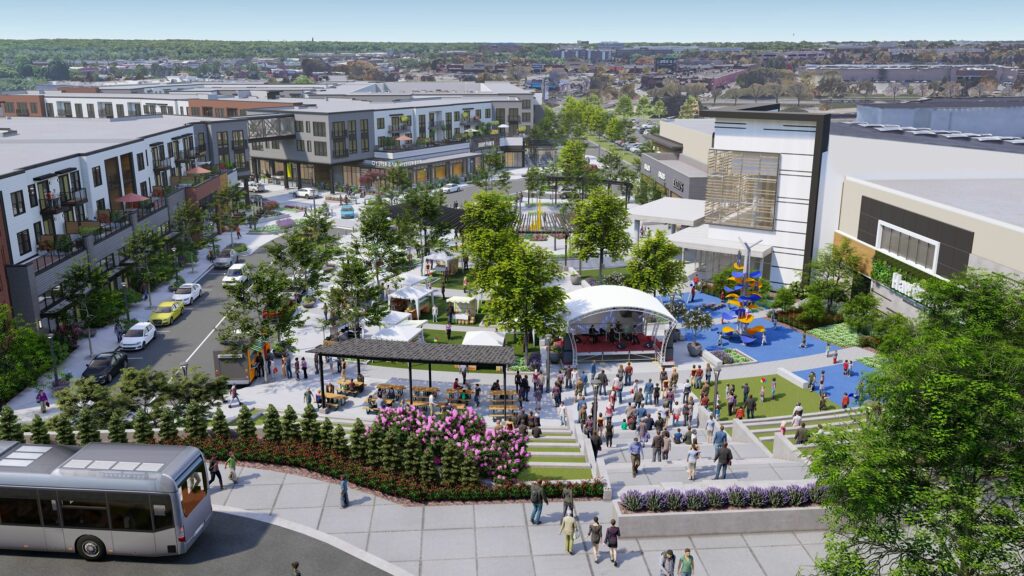
That question was at the center of a recent municipal workshop, hosted by Lake County Partners and sponsored by Libertyville Bank & Trust, which included a panel of speakers from Fox Lake, Lincolnshire, Round Lake, and Vernon Hills.
“Meetings like these create an important forum for municipal leaders to come together, share what they’re seeing in their communities and learn from one another,” said Steve Madden, CEO of Libertyville Bank & Trust Company, N.A. and Former Chair of Lake County Partners’ Board of Governors. “By bringing people to the same table to discuss challenges, share ideas and explore practical solutions, we can strengthen collaboration across Lake County and help communities move important economic development initiatives forward.”
The discussion made one thing clear: housing is no longer separate from economic development. It is a critical part of it.
As Lake County continues to see investment across life sciences, manufacturing, office, retail and other sectors, the availability and diversity of housing will play an increasingly important role in the county’s ability to attract businesses, retain talent and support long-term growth.
Nearly 800 New Housing Units & Counting
Lake County Partners has made significant progress on the housing front this year, helping drive nearly 800 new housing units across the county. Developments have included:
- Continuum Capital, Libertyville
- Centennial Hawthorn #1 (open several years ago) and #2 (currently in for permit), Vernon Hills
- Zeller – Modena, Highwood
- Shorewood, Buffalo Grove
That work comes alongside projects and investments in major economic sectors, including life sciences, manufacturing and office development. The connection is intentional. When companies considering Lake County ask about the region’s workforce, quality of life and ability to attract talent, housing is part of the conversation.
A strong housing market gives employers more options when recruiting and retaining employees. It can help reduce long commutes, support vibrant commercial districts and create the population density necessary to sustain restaurants, retailers and other community amenities.
In other words, housing helps make Lake County competitive.
The challenge is that new housing is increasingly difficult to build. Land, infrastructure, labor and construction costs have all increased, making the economics of development more complicated. That means municipalities and regional partners are looking for practical tools that can help projects move forward.
One such tool is the use of Enterprise Zones.
Lake County Partners works with municipalities to explore how enterprise zones can be layered onto eligible properties to support housing development. One potential benefit is an exemption at the point of sale that effectively reduces the cost of eligible building materials by 6.25%.
On a large project, that can make a meaningful difference. For example, on a $44 million project, with the assumption that 40% of the project budget is eligible building materials, an exemption of 6.25% of state sales tax alone would equal $1.1 million in savings.
In a development environment where costs can determine whether a project moves forward, that kind of savings can be the linchpin that makes a deal work.
Fox Lake: Creating Certainty for Developers
Fox Lake offered a strong example of how proactive planning and communication can help create an environment for housing development.
The village’s work has focused on advancing housing through local technical assistance and a broader strategy centered on transit-oriented development, downtown revitalization and mixed-use growth. “Fox Lake currently has more than 350 housing units under construction or in the development pipeline, including approximately 300 market-rate units expected to become available in late September and 50 affordable units currently going through Final PUD,” reports Patrick Ainsworth, the Economic Development Director at the Village of Fox Lake. “That progress did not happen in isolation.”
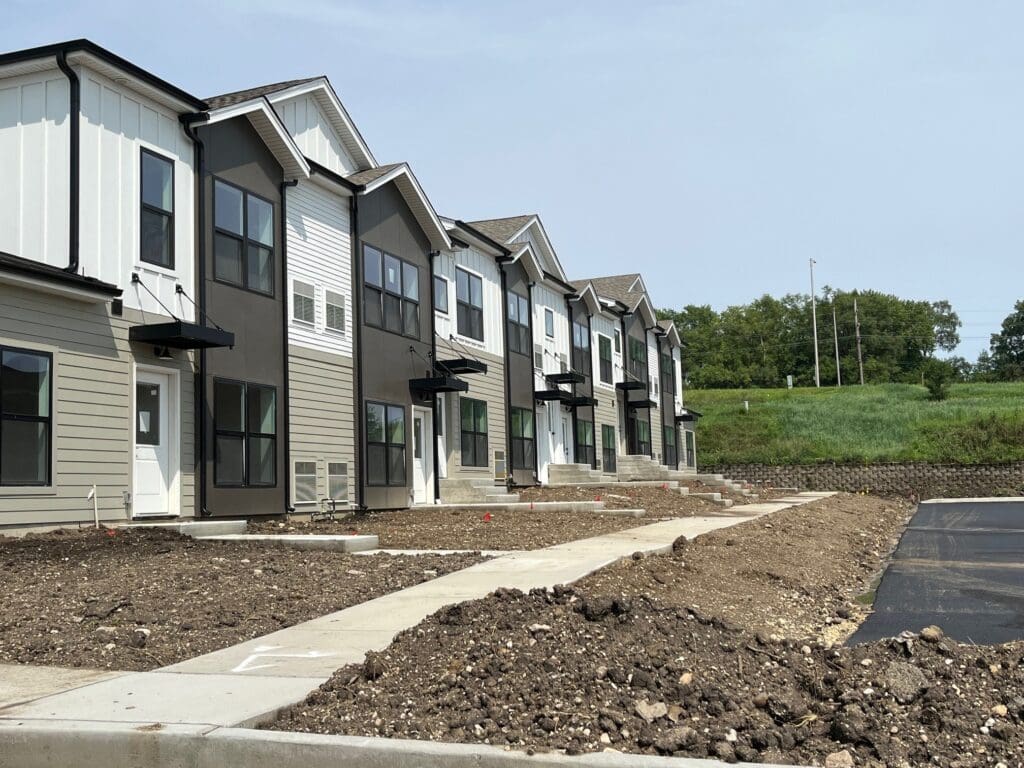
The village’s comprehensive plan and downtown plan have helped establish a clear vision for where and how development should occur. Those plans provide greater certainty to both the community and developers as projects move through the application and approval process.
Fox Lake has also created new, non-binding opportunities for developers to bring housing concepts forward for review and receive feedback before formally entering the entitlement process.
That approach allows issues to be identified earlier, while projects are still taking shape.
The Mayor and village leadership have also made a point of investing time upfront to provide guidance as applications are developed. That open dialogue has helped create a more collaborative process and, ultimately, helped fuel new projects. In this way, Fox Lake uses certainty as an economic development tool.
When municipalities clearly communicate their vision and engage with developers early, it can reduce uncertainty and help projects move more efficiently.
Vernon Hills: Finding New Life for Commercial Property
Vernon Hills is approaching housing from a different angle—by looking at how existing commercial areas can evolve.
The village has put strategic effort into the retail and commercial spaces for which Vernon Hills is known, particularly around the Milwaukee Avenue and Route 60 intersection.
A decade ago, there were no residential units within a half-mile of that intersection. Today, that is changing dramatically.
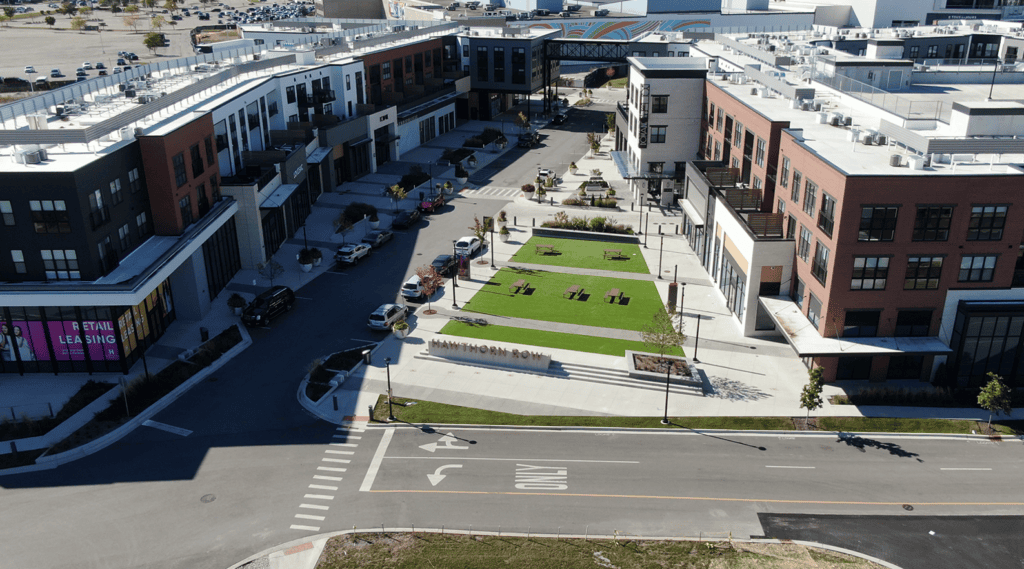
The redevelopment of Hawthorn Mall has served as a catalyst, with projects such as The Domaine, which includes 311 apartment units, helping establish a new residential component within a traditionally retail-focused area.
A second phase, to be known as Solaire, will mirror the existing units, contributing to a broader transformation that could eventually bring approximately 1,500 residential units to an area where there was virtually no housing a decade ago.
The impact goes beyond the number of rooftops.
“Adding housing near existing retail can change how people interact with commercial districts. Residents living within walking distance of stores, restaurants and services can create a built-in customer base and help support businesses throughout the day and evening,” observes Community Development Director Andrew Jennings.
Vernon Hills’ experience also points to an increasingly important opportunity across the region: redeveloping underutilized commercial property for housing.
Retail spaces on the fringe of established commercial areas may offer opportunities for redevelopment, particularly as consumer habits and the traditional retail landscape continue to evolve.
But these projects come with considerations, including infrastructure. Converting commercial property to residential use can require significant changes to utilities, roads, parking and other infrastructure.
At the same time, the addition of new rooftops can strengthen nearby commercial development and create opportunities for reinvestment.
The result is a potentially powerful cycle: new housing supports commercial activity, while revitalized commercial areas make new housing more attractive.
Round Lake: Policy Changes and Partnerships
In Round Lake, the focus has been on creating the policies, partnerships and housing choices needed to support future growth.
“The village has been working to advance housing development while updating its comprehensive plan to more clearly define what types of housing the community wants—and, importantly, who it wants to attract and retain,” notes Katie Parkhurst, the Director of Community Development.
The village recently updated its impact fees, which had not been comprehensively reviewed since the 1990s. With development activity increasing, Round Lake worked with local school and park districts to evaluate the fee structure.
The result was a reorganization of the fee structure which generally decreased the overall impact fee. The actual fee varies by bedroom count and housing type.
That is part of a broader effort to make the development process smoother and more responsive to current market conditions.
Round Lake is also taking a partnership-oriented approach. The village is working with organizations including CMAP, the Housing Lake Coalition, the Northern Illinois Land Bank, Habitat for Humanity and the local Realtors Association. Those partnerships are helping address everything from missing-middle housing to the redevelopment of blighted or underutilized properties.
The Northern Illinois Land Bank, in particular, has become a valuable resource for addressing properties that may otherwise remain vacant or underutilized. Habitat for Humanity is also actively contributing to the village’s housing stock, with a new home currently under construction following the successful completion of another.
The village’s approach demonstrates that housing progress does not always come from one large development. It can come through a collection of policies, partnerships and smaller projects that collectively expand housing choices.
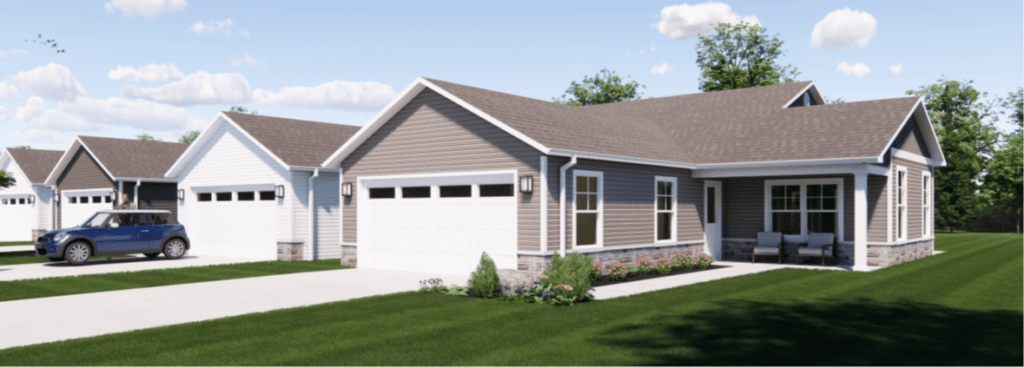
Among the new housing coming to Round Lake is a development known as Cambridge Courts, infill single-family homes, a 17-unit market-rate apartment building at Coventry Glen and 138 single-story market-rate rental units by Redwood Development.
Together, those projects add variety to the community’s housing stock while supporting a broader strategy for growth.
Lincolnshire: Turning an Office Challenge into a Housing Opportunity
Lincolnshire is confronting another issue facing communities throughout the region: what happens to underutilized office space?
The village has historically been a strong office location, but changing market conditions and declining demand have resulted in increased vacancies.
Rather than viewing that only as a challenge, Lincolnshire is examining whether some office properties could become part of the community’s future housing supply.
“The village’s 2024 Comprehensive Plan and participation in the 2025 Homes for a Changing Region Housing Study have helped shape that conversation, and market trends are certainly playing an important role,” notes Tonya Zozulya, Lincolnshire’s Planning and Development Manager.
Multifamily housing has emerged as one potential alternative for vacant or underutilized office properties, particularly as residents increasingly seek walkability, mixed-use environments, diverse housing options and community gathering spaces.
Employers are looking for many of the same things from a different perspective. Housing close to employment centers can help companies retain employees, reduce long-distance commutes and provide workers with more opportunities to live near their jobs.
Lincolnshire’s experience also underscores an important point about density.
Discussions about adding housing should not focus solely on the number of units. Density can also create opportunities for additional open space, improved amenities, walkability and other quality-of-life improvements.
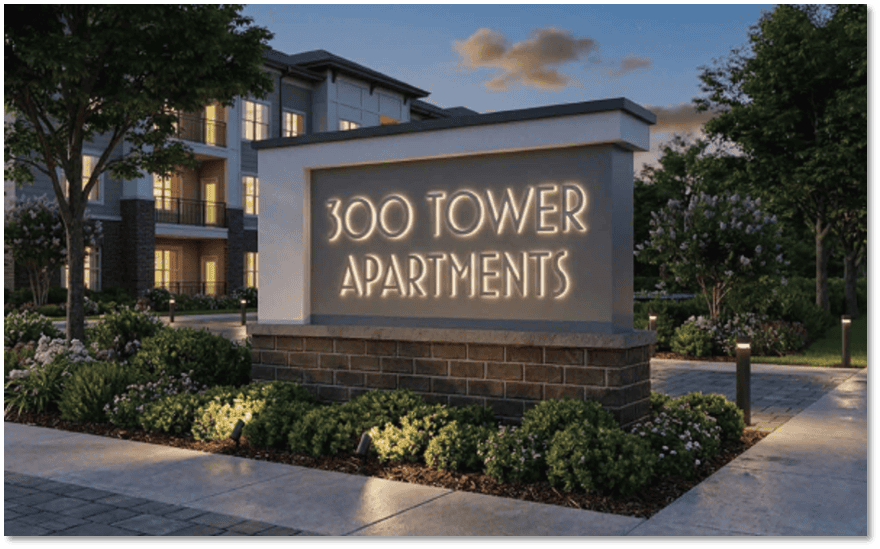
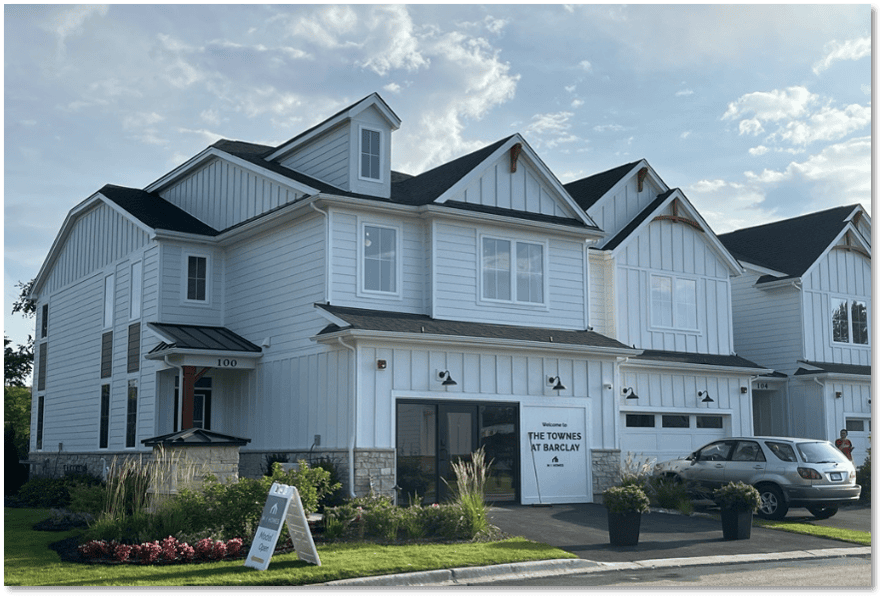
The goal is not simply to add housing—it is to create communities where people want to live. Projects such as 300 Tower Apartments and The Townes at Barclay Townhomes demonstrate how Lincolnshire is beginning to translate that vision into development.
Making Housing Part of the Economic Development Toolbox
Across all four communities, a common takeaway emerged: zoning and development policy can be economic development tools.
When land, infrastructure, operating and construction costs are high, municipalities have to consider what factors can meaningfully improve the economics of a project.
That does not necessarily mean lowering standards or abandoning community priorities. Instead, it can mean examining whether existing regulations, processes and incentives reflect current market conditions and community goals.
It also means building relationships before a project arrives.
Municipal leaders emphasized the importance of getting to know the people and leaders of other taxing bodies early—not just when a development application is on the table. Building those relationships in advance creates opportunities for collaboration and helps ensure that different agencies understand the community’s goals.
Perhaps most importantly, those relationships should not be purely transactional.
Lessons for Communities Looking to Advance Housing
During the panel discussion, municipal leaders were asked a simple but important question: What is the most important lesson your community has learned that could help another municipality successfully advance housing development? Several themes emerged.
First, take a step back and make sure elected officials understand the development process and the community’s long-term goals. Offline education and ongoing communication can help ensure that decisions are grounded in a shared understanding of how development works.
Second, establish attainable goals and make sure the need for housing is reflected in budgets, work plans and broader municipal strategies.
Third, use studies and plans to inform the conversation. Comprehensive plans and housing studies can provide a framework for difficult discussions and help communities understand how local needs fit into a broader regional picture.
And finally, be willing to be nimble.
Housing development is complex. Market conditions change. Projects evolve. Costs fluctuate. Communities need the flexibility to respond while remaining focused on their long-term objectives.
Above all, the panel emphasized the importance of talking to people and building relationships. Housing development is a team effort—and successful projects require collaboration among municipalities, developers, taxing bodies, regional organizations and the broader community.
Building Lake County’s Future
The meeting conversation demonstrated that there is no single solution to fueling housing development in Lake County.
Fox Lake is using planning and early engagement to create certainty. Vernon Hills is demonstrating how residential development can help transform commercial areas. Round Lake is focusing on policy changes and partnerships to expand housing options. Lincolnshire is looking at how changing office market conditions can create opportunities for new residential development.
Each community is taking a different path, but they share a common objective: creating places where people can live, work and thrive. That objective matters not only for residents, but for the future of Lake County’s economy.
Lake County’s appeal has always been rooted in its exceptional quality of life—from outstanding schools and expansive parks and open spaces to strong communities, access to transportation, healthcare and the broader Chicagoland economy. Those same qualities make it a compelling place for businesses to invest, grow and attract talent.
Maintaining that advantage will require the county to keep looking ahead, adapting to changing needs and creating room for the next generation of residents and businesses. The housing conversation is an important part of that work. By taking a thoughtful, forward-looking approach to development, Lake County’s communities can preserve the qualities that make the county special while ensuring there are opportunities—and places—for everyone who wants to live, work and build a future here.
Housing is economic development. And across Lake County, communities are showing what is possible when they boldly make it a priority.